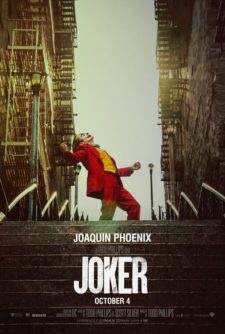
JOKER
An angry, violent origin story that turns a villain into a symbol.
Should You Watch It?
Joaquin Phoenix gives a committed performance as Arthur Fleck, but the film's three-star entertainment value cannot overcome its abhorrent content and worldview. The story is somber, violent, and depressing. Its depiction of the Joker offers little cleverness, wit, or intelligence—only malice and pity.
The movie comes close to glamorizing the Joker's violence. It turns him into an urban hero for leftist protestors and presents his revenge against people who hurt him as a rebellion others can admire. The source review also warns that a few disturbed viewers or extremists might try to imitate the film's murderous revenge.
Even older teenagers and adults should stay away. SKIP IT.
The Story
NO SPOILERS — WE KEEP THE SURPRISESArthur Fleck works as a clown while pursuing a career as a mediocre standup comedian. Troubled and emotionally damaged, he lives with his mother in a Gotham City overwhelmed by garbage, unemployment, anger, and social unrest.
After being beaten by teenagers and mistreated by others, Arthur becomes increasingly isolated and angry. A violent encounter on a subway sets him on a path toward becoming Batman's future nemesis, while the city begins turning the mysterious clown killer into a symbol of rebellion.
Is It Any Good?
Three stars means JOKER has some filmmaking and performance value, but the source review finds the overall experience too somber, violent, and depressing to be truly entertaining.
The film's central performance comes from Joaquin Phoenix, and Robert De Niro plays a television talk-show host who mocks Arthur's mediocre standup routine. Still, the source review finds no cleverness, wit, or intelligence in this version of the Joker. The movie's malice and pity drain the pleasure from one of popular culture's most iconic villains.
The Worldview
JOKER presents a strong Romantic worldview with politically correct elements. Arthur becomes a psychotic killer because of a corrupt, angry, chaotic, and virtually insane city, along with people who mistreat him. The film's explanations for his behavior attack the way Gotham treats the poor and weak and blame the rich and powerful for social suffering.
The movie does not exactly endorse Arthur's murderous revenge, but it comes close to glamorizing it. Leftist protestors turn the clown killer into an idol, worship him when he reveals himself, and celebrate his violent rebellion. The film also portrays Thomas Wayne, Batman's father, as a stuck-up, power-hungry rich man who looks down on the poor. In doing so, the story turns the values of the Batman comic books upside down.
The film's central idea—that mistreatment can drive a person toward revenge—cannot excuse murder. Scripture says, “Vengeance is mine, I will repay, says the Lord” (Romans 12:19).
The Content Guide
The specifics — spoilers included by nature — so you can judge for your own family.
Dominant Worldview and Other Worldview Content/Elements
Very strong Romantic worldview with some strong politically correct elements where society, including Batman’s wealthy father Thomas Wayne and the title character’s own mother, has turned the title character into a troubled, angry and ultimately violently psychotic man who hates rich and powerful people and becomes a symbol of rebellion for leftist protestors who also seem to hate rich and powerful people, plus, although the movie doesn’t exactly endorse the title character’s murderous revenge, it does endorse his hatred of rich and powerful people and turns Batman’s father into a power-hungry villain who looks down on the poor, thus endorsing the politically correct elements in the story
Foul Language
About 41 obscenities (mostly “f” words), one Jesus profanity and three light profanities (which seem borderline)
Violence
Some very strong/extreme/graphic violence and strong violence include man shot point blank in head, man knifed in neck and head with lots of blood, man shoots boy’s mother (not seen), but blood specks splatter boy’s face, thug shoots boy’s father in front of boy, teenage thug hits man in head with wood advertising sign, teenage thugs kick man as he lies on ground, drunken men kick man after knocking him down, but he shoots two of them during the fight and chases down the third one (who’s wounded in one leg) to shoot several bullets into him, man smothers elderly woman to death in her hospital bed, reports of child abuse mentioned, ambulance hits police car, and masked men driving ambulance carefully lift bloodied man’s body out of the police car and onto the hood, a rich man hits another man in the face, foot chase when man tries to catch teenage boys who stole his advertising sign, car hits man chasing teenage boys, and man smashes into car window but gets up after falling to the street
Sex
Implied fornication between title character and a woman, but the movie later seems to imply that the title character imagined that the woman was responding to him romantically
Nudity
Upper male nudity in several scenes when the title character takes off his shorts or walks around in his apartment in his underwear
Alcohol Use
Brief alcohol use and man kills three drunken men who harass him and a woman on the subway late at night
Smoking and/or Drug Use and Abuse
Title character smokes often, which becomes pretty annoying during the movie, in an obnoxious way;
Miscellaneous Immorality
Strong miscellaneous immorality includes teenagers steal a working clown’s advertising sign and eventually destroy it by using it to whack him in the head, three drunken rich men harass two people on a subway, a TV show host mocks a mediocre standup comedian on his show, and this angers the comedian to the point of violence, and mentally disturbed title character eventually becomes psychotic and decides to take violent revenge against the people who abused him or whom he thinks abused him, including his own mother.
Talk About It
Questions for the drive home, the dinner table, or the youth group.
What is the difference between explaining a person's suffering and excusing that person's sin?
Romans 12:19 · James 1:14–15How does the film portray the rich, the poor, and people who feel mistreated? What does Scripture say about showing partiality?
James 2:1–9Why can revenge and public adulation be spiritually dangerous?
Proverbs 24:29 · Romans 12:17–21How should Christians respond when a story turns a destructive person into a symbol of rebellion?
Philippians 4:8 · 1 Thessalonians 5:21–22The Final Word
JOKER is a technically serious but deeply depressing film that comes close to glamorizing murderous revenge. Its content and worldview make it unsuitable for families and dangerous for some viewers. SKIP IT. For better choices, see our.