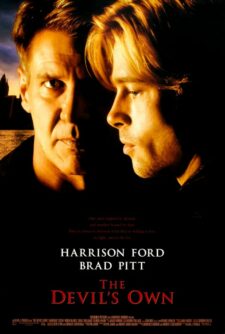
THE DEVIL’S OWN
A violent IRA drama best left for discerning adults at home.
Should You Watch It?
THE DEVIL’S OWN has the makings of a serious moral drama. Two strong central characters wrestle with loyalty, integrity, family, political principles, and the consequences of violence. The film also promotes family and exposes how killing and strife harm everyone, especially children.
But those strengths are buried under relentless, brutal violence. One intense scene follows another until the viewer may feel exhausted and numb. Heavy editing leaves story lines dangling, character development becomes inconsistent, and the ending is sappy and anti-climactic rather than willing to face the questions the movie raises.
Because the source finds real merit but judges the finished film unsatisfying, watch this only at home and only as a discerning adult.
The Story
NO SPOILERS — WE KEEP THE SURPRISESFrankie, an IRA terrorist hiding in New York City, is placed in the home of Tom O’Meara, a painfully honest veteran of the New York Police Department who knows nothing about Frankie’s occupation.
Frankie’s kindness helps him form a genuine bond with Tom and the O’Meara family. But as his presence puts the family in peril, both men must confront competing loyalties to each other, their families, and their causes.
Is It Any Good?
Two stars means this film has worthwhile ideas and assets, but they are overwhelmed by serious flaws.
The central relationship presents intriguing moral dilemmas through two men shaped by different American and Irish experiences. The film promotes family, integrity, fierce loyalty, and the destructive consequences of killing and political strife. Children’s appearances also prick the heroes’ consciences and suggest that children are the true victims of violent conflict.
Unfortunately, the plot and best scenes seem sacrificed to fast-paced, brutal action. Heavy editing leaves dangling story lines, character development is inconsistent and somewhat unrealistic, and the ending takes an easy, disappointing way out. The result is an unsatisfying action drama rather than the powerful moral film it might have been.
The Worldview
The film presents a moral worldview with positive Christian elements. Its characters cling tenaciously to personal systems shaped by their experiences, including American and Irish ideas of loyalty and justice. Tom’s integrity is tested when he considers lying to protect his partner, while Frankie briefly reflects on his failure to live up to Jesus’ example. The film also treats family as important and shows that killing and strife carry painful consequences.
Yet the movie’s moral questions are not explored as fully as they could be. Its heroes are ambiguous, making it difficult to know whether to root for Tom or Frankie. The film’s critique of political violence is also undermined by the graphic brutality that dominates much of the story. Children remind both the characters and the audience of the human cost, but this powerful theme is never adequately explored.
Scripture is clear about the value of human life: “You shall not murder” (Exodus 20:13). The film recognizes that violence harms people, but it largely leaves its deeper moral questions unanswered.
The Content Guide
The specifics — spoilers included by nature — so you can judge for your own family.
Content Summary
Moral worldview with positive Christian elements & characters cling tenaciously to individual systems shaped by experience; 5 profanities & 23 obscenities; extensive violence in majority of scenes with gunfire & explosions yet killing portrayed as wrong & harmful; no sex; no nudity; and, lying.
Talk About It
Questions for the drive home, the dinner table, or the youth group.
The film places family loyalty beside loyalty to a political cause. What should guide our loyalties when they conflict?
Matthew 22:37–40 · Acts 5:29The story shows that violence harms more than its immediate targets. How does Scripture call us to respond to conflict?
Romans 12:17–21 · James 3:17–18Tom faces a crisis over lying to protect someone. When, if ever, do good intentions make dishonesty acceptable?
Ephesians 4:25 · Proverbs 12:22Frankie reflects on failing to follow Jesus’ example. What does genuine repentance require beyond regret?
2 Corinthians 7:10 · 1 John 1:9The Final Word
THE DEVIL’S OWN contains strong moral ideas about family, integrity, loyalty, and the cost of violence. But relentless brutality, excessive language, confused storytelling, and a disappointing ending overwhelm those strengths. For discerning adults who still want to watch, choose home viewing and thoughtful conversation. WAIT FOR HOME — ADULTS ONLY. For other options, see.