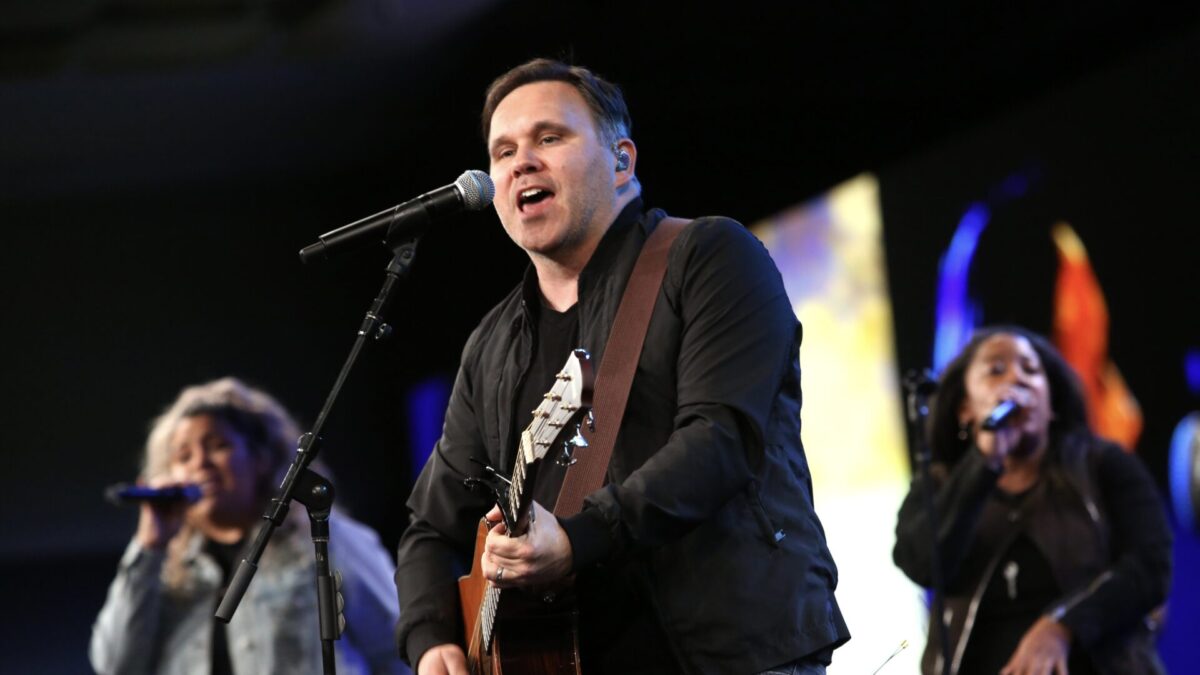
Matt Redman doesn’t want a worship song to leave people just sitting in the pew nodding along — he wants it to get them talking back to God.
“There’s a beautiful dynamic that happens in worship where you tell the story — and then you respond to it,” the British worship leader and songwriter told RELEVANT Magazine in an interview published Aug. 20, 2026. It’s a distinction Redman, best known for penning “10,000 Reasons (Bless the Lord),” has been drawing for years, and it comes down to a simple test: does the song stay a lecture, or does it become a prayer?
Redman calls that shift the “chapel” moment.
“I don’t want my songs to just be a classroom — I want them to be a chapel too,” he said. A classroom teaches. A chapel is where you actually kneel down and say something to God yourself, and Redman thinks too many modern worship songs stall out in the classroom.
That’s the difference, as Redman lays it out, between horizontal worship and vertical worship. Horizontal songs describe God to the people standing next to you in the sanctuary. Vertical songs turn and speak straight to Him. Redman isn’t against the first kind — teaching matters — but he argues corporate worship needs to land somewhere vertical, in wonder and direct address, or it risks becoming information without intimacy.
Related: Matt Redman Discusses His Epic ‘How Great Thou Art’ Collaboration
He breaks the strongest songs into three movements: reenactment, realization and anticipation. A good Christmas song, he explained, should walk a congregation through what happened at Bethlehem, what that birth means for them today, and what it points toward — Christ’s return. Skip any one of the three, in Redman’s view, and the song loses something essential: history without meaning, or meaning without hope.
Underneath all of it is Redman’s insistence that worship songs hold two truths about God at once instead of picking the comfortable one.
“He’s the God who thunders and whispers,” he said, framing that tension as the whole point rather than a contradiction to smooth over. “The wonder of the friendship is the fact that He is to be feared and yet wants friendship with us.” A song that only whispers flattens God into a mascot. One that only thunders makes Him unapproachable. Redman wants both notes ringing at once.
None of this is a new argument for Redman — it’s closer to a career-long project. He said in 2023 that modern worship has gotten better at production and songcraft but still lags in theological depth, pointing to hymn writers like Fanny Crosby and Charles Wesley as the standard.
“Simple doesn’t have to mean shallow,” he said then.
By 2024, he was pushing worship leaders to stop writing alone and start teaming up with pastors and theologians, since, as he put it, “we’re always better together.”
It’s worth Christian families paying attention to, and not because it’s an abstract songwriting seminar. What a congregation sings shapes what it believes, long after the sermon is forgotten — theologians have made that case for centuries, and Redman is essentially restating it for the streaming-playlist era. A worship set that never leaves the classroom trains people to think about God. One that finds the chapel moment trains them to talk to Him. For parents trying to raise kids with a clear-eyed, undiluted picture of who God actually is — fearsome and near, at the same time — that’s not a small distinction. It’s the difference between a song people hum and a song people pray.
Read Next: What Matt Redman Believes About the Future of Worship Music
Questions or comments? Please write to us here.