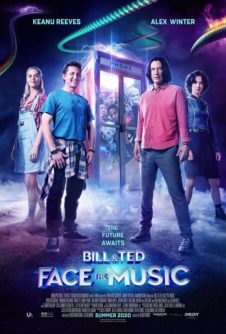
BILL & TED FACE THE MUSIC
Funny and tender, but its theology makes it a skip.
Should You Watch It?
Bill and Ted’s latest adventure has real strengths. Its silly humor is sometimes funny, its tender moments can be endearing, and its story promotes love, forgiveness, family, sacrifice, repentance, and reconciliation.
But those strengths are overwhelmed by the movie’s worldview. It presents a New Age vision of universal salvation, suggesting that humanity can be saved through music, harmony, and working together instead of through the Gospel of Jesus Christ. References to Jesus and Hell are also treated in a light, comic manner. The movie is not maliciously mocking Jesus or the Gospel, but the result can confuse impressionable children, teenagers, and viewers who are not grounded in Christian doctrine.
There is also brief foul language and a comical incest reference. Despite its entertainment value and positive moral elements, this is one to skip for family viewing.
The Story
NO SPOILERS — WE KEEP THE SURPRISESBill and Ted are now middle-aged rock guitarists with wives, daughters, and 25 years of failed attempts to write the song that will unite humanity. When visitors from the future give them only 77 minutes and 25 seconds to save Reality, the pair turns to time travel and their future selves for help.
Their daughters, Billie and Thea, are on the case too. The goofy family adventure sends everyone searching across time for the music that might bring harmony to the world.
Is It Any Good?
Three stars means this is a fitfully funny movie with genuine heart, though its frantic plot keeps it from becoming consistently satisfying.
The story contains silly humor that works in places, along with tender, heartfelt moments. Bill and Ted’s relationship with their daughters is endearing, and the movie’s themes of love and forgiveness give parts of it emotional weight.
However, some comedy misses the mark. The many characters and frantic subplots sometimes distract from the main storyline. The result is entertaining in stretches but uneven overall.
The Worldview
The movie has a strong moral and redemptive premise. It promotes family, love, forgiveness, sacrifice, repentance, and reconciliation. Bill and Ted eventually learn to say “I love you” directly to their wives, and their bond with their daughters is presented warmly.
The central problem is the movie’s strong New Age theology. It suggests that world peace and harmony can come through music and cooperation, with a kind of universal salvation in which every human being is redeemed and the world is saved. That replaces salvation through Jesus Christ’s sacrificial death on the Cross, God’s grace through faith, the work of the Holy Spirit, obedience to God’s moral commands, and making disciples of all nations.
The movie also displaces historical figures, including Jesus, as time and space collapse. Jesus appears in comic situations, including at a rap concert and later playing an instrument with the apostles. Hell is depicted as a fire-and-brimstone prison but with little pain, and escaping it is relatively easy. These elements are played with tongue-in-cheek humor rather than malicious mockery, but they still blur important Christian truths.
The movie longs for harmony and salvation for everyone, but Jesus commands His followers, “Go therefore and make disciples of all nations” (Matthew 28:19).
The Content Guide
The specifics — spoilers included by nature — so you can judge for your own family.
Dominant Worldview and Other Worldview Content/Elements
Mixed pagan worldview, set in a comic or light satirical world, with strong New Age elements about bringing world peace and harmony through music and stopping Time from folding in on itself and including some apparent New Age universalism about saving the world (including everyone in it), plus some possible references to the humanist concept of a multiverse (the movie is a little vague about this), but with a strong moral, redemptive premise and elements promoting family, love, sacrifice, repentance, forgiveness, and reconciliation, with historical figures being suddenly transported to other times and places, including Jesus at the Last Supper (solving the plot problem involves every human being on Earth playing instruments along with a band doing an instrumental song that sounds uplifting, and there’s a shot of Jesus back at the Last Supper happily playing a music cowbell while the apostles also play instruments – as Reality starts to collapse, everyone across time can hear the band playing in present day Los Angeles)
Foul Language
Five obscenities (three “h” words and two d*ck words) and three light exclamatory profanities (mostly OMG)
Violence
Some light comical violence includes some pushing and shoving and yelling, the two title characters fall off a second story balcony but they’re okay, a character shoots at two other characters but misses, a police SWAT truck with armed offices appears, robot accidentally zaps some people and sends them to Hell, crazed convicts beat up robot, robot fires his weapon and sends himself and two other characters to Hell, some flying pterodactyl dinosaurs or flying demons (it’s hard to tell) in Hell periodically burn up in flames while they’re flying, and robot accidentally zaps a man’s cop father and his SWAT truck and sends them to Hell
Sex
In a wedding scene in the beginning, the Ted character explains how his stepmother first married his friend’s father before getting divorced, then married and divorced his father and is now marrying Ted’s younger brother
Nudity
Upper male nudity when title characters confront their future selves, who have ended up in prison and are standing shirtless in the prison yard with other convicts
Alcohol Use
Light alcohol use and a character thinks his future self drinks too much even though he himself doesn’t drink
Smoking and/or Drug Use and Abuse
No smoking or drugs;
Miscellaneous Immorality
Two characters have broken into a rock star’s house to fool their younger selves, some ambiguous moral relativism about stealing from your future self, and prisoners sport tattoos.
Talk About It
Questions for the drive home, the dinner table, or the youth group.
The movie suggests that harmony can save everyone. How does that differ from the Gospel of Jesus Christ?
Matthew 28:18–20 · Ephesians 2:8–9Bill and Ted struggle to express love to their wives. Why can love require humility and change, not just words?
1 Corinthians 13:4–7 · Ephesians 4:2–3The story highlights forgiveness and reconciliation. What does biblical forgiveness look like when relationships are strained?
Colossians 3:12–13 · Matthew 5:23–24The movie treats Hell and Jesus comically. Why should Christians handle holy things with reverence?
Exodus 20:7 · Hebrews 12:28–29The Final Word
This comedy has warmth, family affection, and positive lessons about love and forgiveness. But its New Age universalism, comic treatment of Jesus and Hell, foul language, and incest reference make the worldview too confusing for family viewing. Our answer is SKIP IT. For better options, see.