FINAL ACCOUNT
A powerful warning about ordinary people and murderous evil.
Should You Watch It?
FINAL ACCOUNT is a powerful documentary because it asks how ordinary people became part of extraordinary evil. Through interviews with former German soldiers, Waffen-SS members, women connected to Nazi institutions, and people who lived near labor and death camps, the film examines conformity, authority, peer pressure, Anti-Semitism, complicity, guilt, and responsibility.
The material is deeply sobering. The documentary includes disturbing references to Holocaust violence, brief images of dead Jewish victims, and personal accounts of burning bodies. But the images are more tragic than graphic or bloody, and the film’s questions are important for teenagers and adults to face.
If your family can thoughtfully handle this history, FINAL ACCOUNT is worth seeing. For younger children, choose a less disturbing film.
The Story
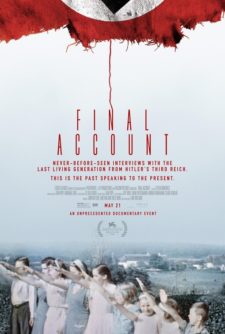
NO SPOILERS — WE KEEP THE SURPRISESFINAL ACCOUNT is a German documentary about Nazi Germany and the Holocaust. Director Luke Holland’s interviews, made over more than 10 years, feature former Nazi Party members, German soldiers, women with family connections to the SS, and people who lived or worked near Nazi labor and death camps.
Alongside their memories, the film shows photographs, newsreel footage, and images of Germany and former camp locations today. The interviewees are asked what they knew, how they became involved, and how they understand their own responsibility.
Is It Any Good?
Four stars means this is an exceptionally effective documentary. More than 10 years in the making, FINAL ACCOUNT combines extensive interviews with archival photographs, newsreel footage, and images of former camp locations.
Its strongest achievement is the way it moves beyond a history lesson to ask searching moral questions. The interviews reveal how a political system, youth organizations, social pressure, and fear could draw ordinary people into murderous evil. The final questions about guilt and responsibility are especially powerful, including one former SS officer’s plea to young Germans: “Don’t let yourself be blinded.”
The Worldview
FINAL ACCOUNT presents a strong but implied moral worldview that exposes Hitler’s National Socialist persecution and murder of millions of Jews. It treats the Holocaust as a great human crime and examines the evil of Anti-Semitism, conformity, cowardice, and excuses made by people who participated in or witnessed the persecution.
The documentary’s central warning is that big-government socialism and a one-party state can turn a whole society, including seemingly innocuous citizens, into fearful and complicit tools of terrible evil. It also asks whether being forced, afraid, or unaware removes moral and legal responsibility. Some interviewees acknowledge their complicity, while others deny knowledge, offer excuses, or reject shame.
The film aligns with a biblical view in its condemnation of murder, persecution, hatred, cowardice, and moral evasion. It departs from a specifically Christian framework by presenting these questions through historical testimony and human moral judgment rather than an explicit gospel message. Its call to resist blindness and face wrongdoing fits Scripture’s command: “He has told you, O man, what is good” (Micah 6:8).
The Content Guide
The specifics — spoilers included by nature — so you can judge for your own family.
Dominant Worldview and Other Worldview Content/Elements
Strong but implied moral worldview exposes the evils of Hitler and his National Socialist persecution and murder of millions of Jews before and during World War II,
Foul Language
One “s” obscenity but no profanities
Violence
Strong, disturbing but not graphic violence includes images of several Jewish corpses during the Holocaust, newsreel footage of a Jewish synagogue burning down because of arson, an image of a line of German troops pointing rifles at Jewish prisoners in a trench before shooting them to death, and disturbing discissions about beatings, working people to death, shooting whole villages to death and burying the victims in mass graves, setting houses on fire and shooting people as they fled from the burning houses, shooting or gassing millions of Jews to death, and burning many corpses, and smelling the smoke from such burning
Sex
No sex
Nudity
Partial upper male nudity
Alcohol Use
No alcohol use
Smoking and/or Drug Use and Abuse
Brief smoking in two or three scenes of archival footage, but no drugs;
Miscellaneous Immorality
One man refuses to show shame about National Socialist Germany’s brutal, genocidal persecution of millions of Jews and refuses to blame Hitler for it, several men shy away from being held directly accountable for what happened during the Holocaust, other people make some excuses, still others claim they were forced to go along with the persecution and murder, and still others make up some excuses for themselves and for Germany, but others admit what happened and their complicity in it, if not full participation, and one man calls Hitler a coward for hiding in his bunker and taking the easy way out by committing suicide.
Talk About It
Questions for the drive home, the dinner table, or the youth group.
The film asks how ordinary people became complicit in evil. How can you recognize when conformity or peer pressure is pulling you away from what is right?
Romans 12:2 · Proverbs 29:25Several people in the film make excuses for what happened. What is the difference between explaining our choices and taking responsibility for them?
Luke 12:47–48 · 2 Corinthians 5:10One former SS officer tells young Germans, “Don’t let yourself be blinded.” What practices help us seek truth instead of accepting what authorities or crowds tell us?
John 8:31–32 · Acts 5:29The documentary shows the consequences of hatred directed at an entire people. How does Scripture command us to treat people who are different from us?
Leviticus 19:33–34 · James 2:1–9The Final Word
FINAL ACCOUNT is a deeply sobering, exceptionally effective warning about how fear, conformity, and ideology can corrupt ordinary people. Its Holocaust imagery and testimony call for family discernment, but its moral questions are important for teenagers and adults. WORTH THE TRIP — MIDDLE SCHOOL AND UP.