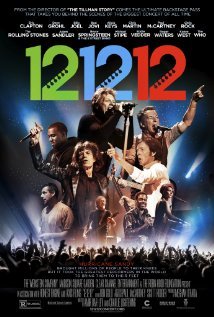
12-12-12
Great concert music, but troubling content makes this adults-only viewing.
Should You Watch It?
12-12-12 captures a major benefit concert organized to help people who lost homes and businesses in Hurricane Sandy. The film’s moral and patriotic side is sincere: helping neighbors in need, honoring New York and its people, and bringing legendary performers together for a charitable cause. Its light Christian elements, including references to church, prayer and praise, are also positive.
But the documentary is uneven. Once the concert begins, it loses much of its drama, even though the music is mostly great and the up-close performances are the main attraction. Strong pagan and humanist elements, profanity, lewd references and brief nudity make this a poor family choice.
You can appreciate the charity without accepting the film’s worldview or content. For discerning adults, watch it at home rather than making it a family outing.
The Story
NO SPOILERS — WE KEEP THE SURPRISES12-12-12 goes behind the scenes of the Madison Square Garden concert held on December 12, 2012, to benefit victims of Hurricane Sandy. After showing preparations and the storm’s devastation across New York, New Jersey and Connecticut, the film follows the concert’s parade of rock stars, from Bruce Springsteen to Paul McCartney and Alicia Keys.
A brief complication arises when the systems handling donations begin to overload.
Is It Any Good?
Three stars means 12-12-12 is reasonably entertaining, with worthwhile music but limited dramatic momentum. The film benefits from high production values and the chance to watch major rock stars perform up close. The musical performances are mostly great, and the charitable purpose gives the event genuine weight.
The documentary is less successful as drama. Once the concert starts, it loses whatever suspense the preparations created. Mick Jagger and Kanye West come across as somewhat silly, while Adam Sandler’s comic routine feels worn thin.
The Worldview
12-12-12 presents charitable action as a powerful response to suffering. It honors America, New York City and ordinary people helping neighbors after disaster. The concert’s moral center is strongest when it points toward compassion, sacrifice and practical help for people in need.
The film also includes light Christian, redemptive and spiritual elements through references to church, prayer and praise. Yet its worldview is mixed. Strong pagan and humanist influences remain, and the ending turns toward the idea that people can lift themselves up without clearly directing that hope toward God. The film also includes a politically correct claim connecting Hurricane Sandy with global warming, a point the source review rejects.
Scripture gives a firmer foundation for the film’s best impulse: “Bear one another’s burdens, and so fulfill the law of Christ” (Galatians 6:2). Christian compassion helps those in need while giving glory to God rather than to human strength alone.
The Content Guide
The specifics — spoilers included by nature — so you can judge for your own family.
Content Summary
Strong mixed pagan worldview with strong moral and patriotic elements honoring America, New York City, and its people, but also strong pagan elements, strong humanist elements, light capitalist elements, and light Christian elements, plus New York’s Democratic governor tries to capitalize on a natural tragedy by spuriously blaming global warning, which has now been revealed as a huge hoax; 22 obscenities (including eight “f” words), one possible Jesus that was very hard to hear or determine, and four light profanities; scenes of violent storm action and fires; no implied or depicted sex, but some lewd references, including a reference to street prostitutes in a parody song from Adam Sandler, and a crude reference to a body part; brief upper male nudity on Roger Daltry of the Who, who performs with his shirt unbuttoned; brief alcohol use and some visits to a couple bars in the devastated area struck by Hurricane Sandy; no smoking or drug use but a possible drug reference about getting “wasted”; and, some miscellaneous content such as rock and roll songs about romantic love, about the teenage years being a wasteland where people get “wasted,” and children wear “Fear breeds walls” T shirts during familiar Pink Floyd song lyrics saying “We don’t need no education. We don’t need no thought control. No dark sarcasm in the classroom. Hey! Teachers! Leave them kids alone!”
Talk About It
Questions for the drive home, the dinner table, or the youth group.
The concert gathers people to help neighbors who have lost homes and businesses. What does loving your neighbor look like after a disaster?
Galatians 6:2 · Luke 10:27The film includes references to church, prayer and praise. How should Christians respond when gratitude and suffering meet?
1 Thessalonians 5:16–18 · Psalm 34:1–4The ending emphasizes people lifting themselves up. What is good about human courage, and where do we still need God’s help?
Psalm 121:1–2 · John 15:5The musicians use their public platform to serve people in need. How can your gifts and opportunities serve others?
1 Peter 4:10 · Matthew 5:16The Final Word
12-12-12 offers mostly great music, strong production and a worthy charitable purpose. But its mature content and mixed worldview make it unsuitable for children and young teens. If you are a discerning adult, WAIT FOR HOME — ADULTS ONLY. For another choice, see.