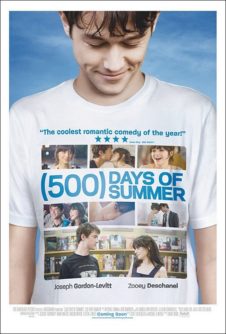
(500) DAYS OF SUMMER
A charming love story with a worldview meant for adults only.
Should You Watch It?
This is a charming, quirky, and surprisingly realistic story about falling in love, getting hurt, and discovering who you are afterward. The directing, performances, witty dialogue, music, and creative use of split screens, time jumps, illustrations, and a song-and-dance sequence make the experience delightful to watch.
The film also offers positive affirmations of marriage. But its central idea of romantic destiny is strong, and its characters pursue emotion apart from reason and apart from God. Sexual references and content, foul language, alcohol use, and a New Age concept of Fate further complicate the picture.
If you are a discerning adult who can engage those concerns thoughtfully, this is worth seeing for its craft and emotional honesty. For children and young teens, choose something else. WORTH THE TRIP — ADULTS ONLY is the practical answer.
The Story
NO SPOILERS — WE KEEP THE SURPRISESTom Hansen is an idealistic would-be architect turned greeting card writer who believes he will never truly be happy until he finds “the one.” Then he meets Summer Finn, his boss’s beautiful new secretary.
Summer wants a casual relationship with no labels, while Tom hopes he can change her mind. Over 500 days, their relationship moves through romance, heartbreak, and uncertainty as Tom asks whether love is cosmically destined—and whether Summer is truly “the one” for him.
Is It Any Good?
Four stars means this is an exceptionally entertaining and well-made film. First-time director Marc Webb uses split screens, dream sequences, time jumps, narrators, a cartoon bird, illustrations, and a song-and-dance number without letting the techniques overwhelm the story. Instead, they help the plot unfold splendidly well.
The music is delightful. The acting is worthy of recognition, especially Joseph Gordon-Levitt’s performance. The dialogue between the main characters is witty and intelligent, and the simple plot is handled with strong production values and considerable skill.
The Worldview
The film is dominated by a Romantic worldview. Its young, idealistic characters are guided by emotion apart from reason and apart from God. Tom believes a cosmic force or Fate controls human relationships, while Summer rejects love because of the hurt she experienced during her parents’ divorce. Her view eventually changes, but not through faith in God.
The movie does affirm marriage in meaningful ways. It also presents one character as a voice of reason, encouraging Tom to consider that Summer may not be “the one” for him. Still, the film’s path toward self-discovery and personal fulfillment remains hollow because it leaves God out of the picture.
The story’s longing for identity, purpose, and lasting love points beyond romance. Scripture says, “So God created man in his own image, in the image of God he created him” (Genesis 1:27). Our deepest identity is found not in finding “the one,” but in belonging to God through Christ.
The Content Guide
The specifics — spoilers included by nature — so you can judge for your own family.
Content Summary
Strong Romantic worldview where protagonist is emotionally driven and believes he will never truly be happy until he finds “the one” and his idealistic path to self-discovery and fulfillment of personal dreams is completely devoid of God, although one character serves as the voice of reason to his passion, plus New Age pagan element with main character believing in fate or some cosmic universal force controlling humanity, light homosexual material with character (who is not always portrayed in the most positive light as a bit of a desperate sleazebag) proposing a new holiday greeting card called “Other” Mother’s Day and same character asks girl if she’s a lesbian because she likes being single and independent, and some moral elements with two positive affirmations of marriage – one of these by a character who starts out being against marriage/serious relationships because of past hurts and ends up getting married; 25 obscenities and three profanities; character smashes a few plates and character punches man in a bar and gets punched in return; strong sexual content includes sexual depiction of two dogs, a couple of derogatory words (one said by a little girl) used in reference to a woman (i.e., skank), passionate kissing, three instances of implied fornication, character breaks out in a song and dance number to celebrate being young and in love and fornicating with his “girlfriend” the night before, couple enters the “adults only” section of a video store and rent a porn film to watch, some instances of a fully clothed couple laying on bed and talking, woman briefly discusses some of her past relationships which include one homosexual relationship and a relationship with a man nicknamed “puma” because of the size of his male genitalia, two characters see who can yell the word “penis” the loudest in a park; upper male nudity and woman’s upper bare back while laying in bed; characters drink beer at a bar and with dinner, drink shots at a bar and at a wedding, drink glasses of wine during a birthday party, man’s little sister gives him a shot of vodka, three instances where characters are drunk, and man buys strong alcohol from a convenience store; no smoking or drugs; and, one reference to Jesus having great “abs,” woman wants keep relationships casual because she says she doesn’t believe in love (her worldview is a result of the pain she experienced as a young girl when her parents divorced), but this is eventually resolved (though apart from God), and characters and story consistently affirm the New Age principle of Fate, with protagonist embarking on path of self-discovery within himself and completely devoid of God.
Talk About It
Questions for the drive home, the dinner table, or the youth group.
Tom believes he will not be happy until he finds “the one.” Where should a Christian ground identity and purpose instead?
Genesis 1:27 · John 1:12Summer’s fear of love is shaped by her parents’ divorce. How can past hurt influence present choices, and where can healing begin?
Psalm 34:18 · 2 Corinthians 1:3–4The film presents Fate as a cosmic force controlling human lives. How does that differ from trusting God’s providence and wisdom?
Proverbs 3:5–6 · Romans 8:28The story offers positive affirmations of marriage. What makes marriage more than romantic feeling?
Genesis 2:24 · Ephesians 5:25The Final Word
This is a beautifully made, emotionally honest film with inventive direction, excellent performances, and positive reflections on marriage. Its Romantic and New Age ideas, sexual material, language, alcohol use, and neglect of God make it unsuitable for children and young teens. For discerning adults, WORTH THE TRIP — ADULTS ONLY. For family-friendly alternatives, see.