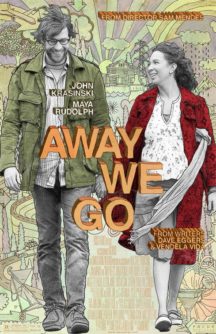
AWAY WE GO
An appealing search for home, family, and commitment — for adults only.
Should You Watch It?
AWAY WE GO is one of the year’s better-directed, written, and acted movies. It is funny, winsome, sometimes sad, heartwarming, and poignant. Maya Rudolph and John Krasinski make Burt and Verona’s love believable, while the story offers an inspiring, somewhat redemptive definition of home, love, and family.
That message comes with a serious cost. The movie begins with the unmarried couple having sex, includes plenty of unnecessary foul language and some very crude sexual references, and does not fully affirm traditional marriage. It also has no spiritual foundation, despite its positive ideas about love, commitment, and family.
Adults who can approach those concerns with discernment may find real encouragement here. For children and young teens, choose something else. WORTH THE TRIP — ADULTS ONLY is the practical answer.
The Story
NO SPOILERS — WE KEEP THE SURPRISESBurt and Verona are a thirtysomething unmarried couple expecting their first child. When their plans for living in Colorado change, they begin an ambitious journey through the United States and Canada.
They visit friends and family while considering where to find work, raise their baby, and build a home. Along the way, their encounters challenge their ideas about love, family, commitment, and belonging.
Is It Any Good?
Four stars means this is an exceptionally entertaining film, and AWAY WE GO earns that rating through its direction, writing, acting, and emotional range. It is sometimes hilarious, sometimes terribly sad, and often heartwarming and poignant.
Maya Rudolph is a revelation as the steady, non-traditional Verona. John Krasinski complements her extremely well as Burt. Their appealing performances make it easy to believe that the characters are totally in love. The film’s happy ending is poignant, and several of its moral moments are both funny and memorable.
The Worldview
AWAY WE GO presents a mixed, pagan worldview. It offers strong, lightly redemptive messages about home, love, and commitment, including the idea that love can be the glue of a positive relationship. It also affirms life and includes a strong message favoring adoption.
The movie’s best moral moment comes when Burt becomes righteously indignant about a married hippie couple’s New Age, politically correct, permissive theories about raising children. The couple is strongly rebuked, and conservative Christian viewers may find the scene especially funny. Another family and marriage shown in the film is very positive, though it carries a tragic ongoing secret.
Still, Verona repeatedly says she does not want to marry, and the movie does not affirm traditional marriage and family as strongly as it could. It also has no spiritual foundation and sometimes expresses an antinomian attitude. The film’s central longing for a place to belong points toward a biblical understanding of home, family, and commitment: “Therefore a man shall leave his father and his mother and hold fast to his wife” (Genesis 2:24).
The Content Guide
The specifics — spoilers included by nature — so you can judge for your own family.
Content Summary
Strong, but mixed, pagan worldview with some strong, lightly redemptive pro-family moral messages about home, love and commitment (including an attack in one scene on politically correct, New Age theories about family and raising children and a strong message favoring adoption) about an unmarried thirtysomething couple expecting their first child, plus crude woman jokes about a possible lesbian woman and sometimes an antinomian tone or attitude expressed (sometimes implied); about obscenities (including many “f” words), seven strong profanities and 10 light profanities; light comic violence when man gets angry at two people, does something crazy and they chase him around their house while he’s running away from them; implied oral sex under bed covers, lead couple is unmarried but lives together, and some crude sexual references, including crude woman jokes about a possible lesbian woman; upper male nudity; alcohol use and light drunkenness; no smoking or drugs; and, woman is not interested in marriage, woman breast feeds child in front of people but nothing revealing is shown, New Age hippie couple shows disdain for people who don’t practice what the crazy things they do, and they are strongly rebuked, and protagonist’s brother says his wife has left him and their daughter.
Talk About It
Questions for the drive home, the dinner table, or the youth group.
Burt and Verona are searching for a place to call home. What makes a home more than a location, and how can your family practice love and commitment where you are?
Joshua 24:15 · Romans 12:10The movie presents both marriage and life together outside marriage. What does Scripture teach about marriage, and why does commitment matter?
Genesis 2:24 · Hebrews 13:4The film includes a strong message favoring adoption. How does the Bible describe God’s care for children without families, and how might Christians reflect that care?
Psalm 68:5–6 · James 1:27Burt rebukes permissive theories about raising children. Which values should guide a family’s decisions, and how can parents pursue wisdom rather than simply follow cultural pressure?
Deuteronomy 6:6–7 · James 1:5The Final Word
AWAY WE GO is beautifully acted, funny, and deeply interested in home, love, and family. Its unnecessary language, sexual content, and weak treatment of marriage keep it from being family viewing. For discerning adults, however, its warmth and moral insight make it WORTH THE TRIP — ADULTS ONLY. For other options, see.