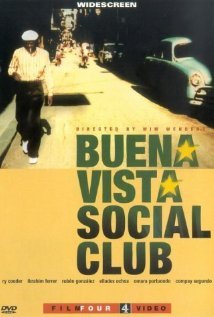
BUENA VISTA SOCIAL CLUB
Wonderful music, uneven filmmaking, and worldview concerns make this a home viewing.
Should You Watch It?
You will find much to enjoy here. This documentary celebrates aged Cuban musicians and singers as they record in Havana and perform in Amsterdam and New York City. The sound is wonderful, and the musicians’ gifts—especially pianist Ruben Gonzalez’s—can make the film mesmerizing.
The film is less successful as filmmaking. Poor color in the Havana scenes and frequent cuts away from songs dilute the pleasure. Many interviews are simple biographies, and the love songs often lack the depth the filmmakers seem to see in them.
The larger concern is worldview. The movie includes positive references to Cuba’s socialist regime and presents one musician’s devotion to a “lucky” statue as false religion or superstition. Still, its strong pro-capitalist subtext offers a useful point of discussion. Watch it at home, where you can pause and talk through both the music and the ideas.
The Story
NO SPOILERS — WE KEEP THE SURPRISESThis documentary follows a group of aged Cuban musicians and singers who helped American popular musician Ry Cooder create a million-selling album. The film explores the title nightclub’s history, interviews the artists about their lives and music, and shows them recording in Havana before performing in Amsterdam and at New York City’s Carnegie Hall.
Is It Any Good?
Three stars means this is a fascinating, often mesmerizing documentary with clear weaknesses. Its sound is quite wonderful, and the musicians’ performances are frequently entertaining. Ruben Gonzalez’s piano playing is a particular highlight, especially when he plays for delighted young gymnasts in an old building turned into a gym.
The film’s direction keeps it from reaching four stars. The Havana scenes have poorly done color, and Wim Wenders cuts away from too many songs instead of allowing the audience to hear them in full. The interviews can become simple biographies, while many of the songs remain superficial love songs. It is an interesting and rewarding audio experience, but unevenly made.
The Worldview
The film celebrates the lives and musical gifts of some of Cuba’s greatest popular musical artists. It also suggests a romantic view of the essential goodness in most, if not all, human beings. That optimism is not examined deeply, especially when the musicians’ stories become mostly biographical and the songs focus on superficial romantic love.
The documentary includes positive references to Fidel Castro’s socialist regime, but it also contains a strong pro-capitalist subtext. The musicians’ admiration for New York City’s skyscrapers and culture contrasts with the squalor and decrepit environment shown in Havana. The renewed interest in their music was funded by capitalism, giving the film an implicit argument about the benefits of freedom and prosperity.
The movie includes moral elements and references to God, but it also presents pagan elements, false religion, and superstition. One musician seems to worship a “lucky” statue and an image on his cane that he calls “Lazarus.” The film’s celebration of hard work and the fruits of labor offers a more constructive theme, but its view of human goodness and religion remains incomplete.
Scripture warns against replacing God with created things: “You shall have no other gods before me” (Exodus 20:3).
The Content Guide
The specifics — spoilers included by nature — so you can judge for your own family.
Content Summary
Romantic worldview with a strong pro-capitalist subtext & a couple positive references to Fidel Castro's commie-fascist regime, plus some moral elements & references to God, some pagan elements, & scenes of false religion & superstition where one man seems to worship "lucky" statue & image on cane which he calls "Lazarus"; two mild obscenities plus a couple mild, but objectionable sexual references; no violence; brief discussion & lyrics about sexual passion & fornication, but mild; upper male nudity in natural context; alcohol use & inebriation; smoking; and, too much focus in the movie on superficial love songs whose lyrics generally don't have the depth that the filmmakers think they do.
Talk About It
Questions for the drive home, the dinner table, or the youth group.
The musicians connect the joy of music with the fruit of their hard work. How can your work become an offering to God rather than only a way to earn praise?
Colossians 3:23–24 · Psalm 90:17One musician seems to treat a statue and its image as “lucky.” Why does Scripture forbid idols, and what modern things can take God’s place in our trust?
Exodus 20:3–5 · 1 John 5:21The film presents many human beings as essentially good. What does the Bible affirm about humanity’s dignity, and what does it say about humanity’s sin?
Genesis 1:27 · Romans 3:23The documentary contrasts life in Havana with admiration for New York City. How should Christians think about material prosperity, freedom, and the responsibilities that come with them?
Deuteronomy 8:17–18 · 1 Timothy 6:17–19The Final Word
The music is wonderful, and the musicians’ gifts are worth hearing. But uneven direction and worldview concerns make this a better home discussion than a family theater trip. Choose WAIT FOR HOME, especially if you want time to talk through the film’s ideas. For other options, see.