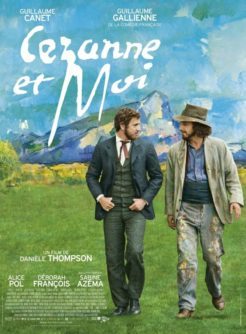
CEZANNE ET MOI
An intriguing portrait of artistic friendship, made for adults only.
Should You Watch It?
If you are an adult drawn to art history and character-driven drama, Cezanne et Moi offers a fascinating look at the long friendship between painter Paul Cezanne and novelist Emile Zola. The acting is solid, and the film captures the tension between artistic ambition, personal loyalty, jealousy, and criticism.
But the movie is also confusing at times and gives too little attention to Zola’s literary accomplishments. Its R rating is earned by plentiful strong language and scenes of explicit nudity, along with adultery and other morally troubling material.
The movie has real value as a portrait of two influential artists, but it is not suitable for children or young teens. Adults who can engage its difficult content may find the film worthwhile; families should choose something else. The practical answer: watch it only if you are an adult prepared for its content and complicated worldview.
The Story
NO SPOILERS — WE KEEP THE SURPRISESThis French period drama follows the decades-long friendship between 19th-century painter Paul Cezanne and novelist Emile Zola. Beginning when they meet as young teenagers, the story follows their move toward Paris, their artistic circles, their growing professional differences, and the pressures that test their relationship.
Cezanne struggles for recognition as a painter while Zola achieves fame as a novelist. Their friendship becomes entangled with questions of loyalty, success, love, and what art should express.
Is It Any Good?
Three stars means this is an often fascinating but imperfect film. The acting is solid, and the movie gives an engaging glimpse into the lives and work of two acclaimed French artists.
Its main weakness is the storytelling. Told in flashback, the film can be confusing, and it gives too little attention to Zola’s accomplishments. The ending’s focus on Cezanne’s increasingly abstract paintings and their influence on modern art is especially interesting, but the movie ultimately reveals more about Cezanne than Zola.
The Worldview
Cezanne et Moi presents a strongly Romantic view of art, emphasizing the artist’s personal expression of reality, beauty, and aesthetic sensibility. The film is more interested in Cezanne and Zola’s friendship and artistic philosophies than in their politics, although it includes some light anti-capitalist and socialist elements through criticisms of the bourgeoisie.
The movie’s depiction of personal expression is not necessarily opposed to Christianity. Cezanne is portrayed as seeking the essential structure of reality rather than merely its surface appearance. At the same time, the film does not clearly establish the extent of Cezanne’s Catholic faith and leaves out his reported return to that faith in old age. Its history is also somewhat revisionist.
The film ultimately celebrates artistic influence and the lasting cultural power of Cezanne’s work. Yet Christian viewers should remember that beauty and creativity are gifts that point beyond the artist to the Creator: “The heavens declare the glory of God, and the sky above proclaims his handiwork” (Psalm 19:1).
The Content Guide
The specifics — spoilers included by nature — so you can judge for your own family.
Content Summary
Very strong Romantic worldview concerning art in a story focusing on the most influential Post-Impressionist painter in France (during the end of the 18th Century and the first six years of the 19th) and his on-again, off-again friendship with the most famous French novelist at the time, both of whom criticized capitalist society, so there’s some light anti-capitalist, socialist elements to the story (including a couple vague attacks on the “bourgeoisie”), but the story focuses more on their philosophy of art and their friendship rather than politics, but with some revisionist history that doesn’t refer to the painter’s return to his Catholic faith in his old age (though how strong that faith was isn’t clear from the historical record except that the painter sided with the church in a famous political controversy of the day, but his former friend was on the other side, and the Catholic Church later apologized for its position, which has been deemed anti-Semitic); about 56 obscenities of various kinds (one-third or more are “f” words) and five strong profanities; no real violence; no depicted explicit sex but a few references to prostitution, painter lives with his girlfriend for 17 years before marrying her, novelist cheats on his wife and has two children with his mistress (his wife couldn’t conceive for some reason), and painter’s wife poses as a nude model for him in one scene (something which she didn’t do in real life), and he complains about the complexion of her skin and then touches her breast; slightly obscured full frontal female nudity in a couple scenes where women pose nude for painter(s), upper female nudity when women pose nude for painter, rear female nudity in one or two scenes, and images of nude paintings; alcohol use in several scenes and drunkenness in one or two scenes; smoking but no drug ruse; and, people argue with one another, people are rude with one another, and novelist says cruel things about his painter friend in two or three scenes but the painter overhears them, and it sours their relationship further, even when the painter desires to reconcile with the novelist at the end of their lives (in one scene, for example, the novelist says that the painter’s genius is “stillborn” or incapable of coming to fruition, but his judgment here turned out not to be true).
Talk About It
Questions for the drive home, the dinner table, or the youth group.
The film presents art as an attempt to express reality and beauty. How can creativity honor God without making personal expression ultimate?
Exodus 31:1–5 · Psalm 19:1How can cruel words damage a friendship, even when they contain an element of criticism? What does Scripture call us to say instead?
Proverbs 12:18 · Ephesians 4:29What does the film suggest about success, recognition, and envy? How should Christians measure a meaningful life?
Mark 8:36 · Galatians 6:4The story includes adultery and other broken relationships. What does biblical faithfulness require in marriage and friendship?
Hebrews 13:4 · Proverbs 17:17The Final Word
Cezanne et Moi is a fascinating, solidly acted portrait of two influential artists, though its flashback structure can confuse and its attention is uneven. Explicit nudity, strong language, adultery, and its mature worldview make it unsuitable for families. For discerning adults, it may be worth the time. WORTH THE TRIP — ADULTS ONLY. For family-friendly alternatives, see.