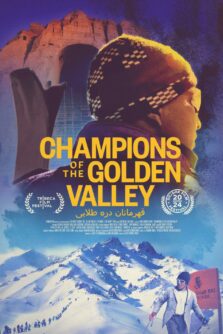
CHAMPIONS OF THE GOLDEN VALLEY
A skier's dream in the Afghan mountains, and a longing for peace.
Should You Watch It?
Here's the decision plainly. This is a four-star documentary — bittersweet, intimate, and often beautiful — about a young Afghan man who brings skiing to a remote mountain valley and, without meaning to, brings something more: friendship across tribal lines, dignity for girls, and a stubborn hope for peace. The filmmaking earns every star, and the skiing itself, achieved with no instructors and no culture of skiing to lean on, is genuinely astonishing.
It is a clean film. No sex, no nudity, one light obscenity. But it is not a children's film. It carries the weight of war — rumors of it, discussions of it, and the horrifying fact of the Taliban destroying some of the greatest art in the world. The story is told by a man now living as a refugee, and that sorrow runs through everything.
So: if you have teenagers, watch it together — it rewards the conversation. If you're choosing for young children, this one is over their heads and heavier than their hearts need. For everyone else, it's worth the trip.
The Story
NO SPOILERS — WE KEEP THE SURPRISESHigh in the mountains of Bamyan, Afghanistan, a young man named Alishah Farhang falls in love with skiing — an unlikely passion in a place with no instructors and no snow-sport tradition at all. He dreams of becoming the first Afghan Olympic skier.
When that dream doesn't go as planned, he returns to his village and starts something smaller and, it turns out, far larger: a homemade ski race he calls The Challenge, teaching farmers' and shepherds' children to ski down mountains they've only ever climbed. Then the girls start showing up.
Is It Any Good?
Four stars, and they're deserved. Director Ben Sturgulewski has made a captivating, nuanced film that never announces its themes — it simply lets you watch them happen. The panoramas are gorgeous, from the Afghan peaks to a small Saxon town in Germany with a beautiful church at its center.
But the film's real achievement is the skiing itself. Watching young men build skis from planks of wood with plastic bottoms cut from milk cartons, then race down mountains with a skill you'd expect only from a trained team — it's remarkable. Our reviewer, who raced on a college freshman ski team, came away amazed at the quality of skiing in so remote a corner of the world. The result is intimate, bittersweet, and a genuine window into history and the human need for redemption.
The Worldview
This is a moral film built on a true story, and its heart is a deep commitment to family — a commitment Alishah reaffirms all the more because he barely got his own family out before the Taliban began killing people. What the film exalts is worth exalting: reconciliation across tribal enmity, the dignity of girls in a place that told them sports weren't for them, and a real, aching desire for peace among the young.
It is not a Muslim religious movie. It neither bashes the radicals nor commends the faithful. It's a film about young people being exposed to cultures and religions beyond their valley, and about love of a shared sport opening hearts. Its prayers happen in a Muslim context, yet the story keeps returning to that church standing in the middle of the German town where Alishah now lives — a quiet visual note the film lets you sit with.
The darkness is real. In 2001 the Taliban blew up the 1,500-year-old giant Buddha statues carved into the cliffs near Bamyan, unwilling to let any history contradict their own. In 2021 they reasserted control, and Alishah — targeted because he let women ski — barely escaped. Many of the girl skiers got out; the boys did not.
Underneath the film runs the longing it can name but cannot fully satisfy: the hope that a country of war could become a country of peace. Scripture points to where that peace finally comes from — "and he shall judge between the nations... they shall beat their swords into plowshares" (Isaiah 2:4).
The Content Guide
The specifics — spoilers included by nature — so you can judge for your own family.
Content Summary
<span class="Apple-converted-space"> </span><b>
Dominant Worldview and Other Worldview Content/Elements
</b><span class="Apple-converted-space"> </span>Moral worldview with a deep commitment to family and based on a true story of a local man who brings skiing to a beautiful remote province of Afghanistan and discovers that the competition reconciles tribal enmity and prejudice against women filled with lots of prayers in a Muslim context but the love for international sports opens the skiers to other cultures and even other religions so the movie is not dogmatically Muslim, plus there are multiple shots of a church that stands in the middle of a town in Germany where the man in the movie now lives with his family; <b>
Foul Language
</b><span class="Apple-converted-space"> </span>One light obscenity; <b>
Violence
</b><span class="Apple-converted-space"> </span>Many references to the violence of the Taliban, including the several Afghan wars and the Taliban destroying the giant Buddha statues in Bamyan, Afghanistan; <b>
Sex
</b><span class="Apple-converted-space"> </span>No sex, and Islam prevents the photographing of women, but women join the ski races and let themselves be photographed; <b>
Nudity
</b><span class="Apple-converted-space"> </span>No nudity; <b>
Alcohol Use
</b><span class="Apple-converted-space"> </span>No alcohol use; <b>
Smoking and/or Drug Use and Abuse
</b><span class="Apple-converted-space"> </span>No smoking or drugs; and, <b>
Miscellaneous Immorality
</b><span class="Apple-converted-space"> </span>Nothing else objectionable.
Talk About It
Questions for the drive home, the dinner table, or the youth group.
Alishah's races turn tribal enemies into friends. Where in your own life is competition dividing people who could be reconciled instead?
Romans 12:18 · Ephesians 2:14The girls of the valley were told sports weren't for them — and skied anyway. What does it look like to defend the dignity of those a culture tries to push aside?
Proverbs 31:8–9 · Galatians 3:28The Taliban destroyed 1,500-year-old art rather than let it contradict their story. Why are those who fear the truth so often driven to destroy it?
John 3:19–20 · Psalm 96:9The young skiers long for peace in a country of war. Where does lasting peace actually come from, and how do we work for it now?
Isaiah 2:4 · Matthew 5:9The Final Word
This is a rare thing: a documentary that's beautiful, honest, and quietly hopeful, telling a true story of courage on homemade skis in a corner of the world at war. It's clean, but its sorrows are grown-up. Watch it with your teenagers and talk afterward. Our answer stands, the same one we opened with: worth the trip — teens and up.