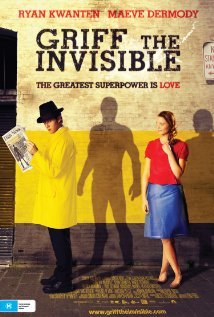
GRIFF THE INVISIBLE
Sweet superhero whimsy, but better saved for discerning adults at home.
Should You Watch It?
Griff the Invisible has a sweet, good-hearted center. Griff wants to help strangers, even when doing so puts him at physical risk. His superhero philosophy echoes the principle that great power brings responsibility, and the film has a refreshing innocence compared with edgier average-Joe superhero stories.
But the movie’s virtues are offset by crude and lewd language, revenge against an office bully, lies to Griff’s brother, and a worldview that leaves open whether Griff and his girlfriend possess unusual powers. The pace is also too slack to sustain much interest or laughter.
Because the film is rated −2 for family content, it is not suitable for children or young teens. Discerning adults may find its kindness worthwhile, but WAIT FOR HOME — ADULTS ONLY.
The Story
NO SPOILERS — WE KEEP THE SURPRISESGriff is an office worker who believes he has superhero abilities, including invisibility. By day, he endures jokes and mean-spirited pranks from a workplace bully. By night, he dons a homemade costume and patrols the city, trying to help people and fight criminals.
His life becomes more complicated when he falls for an eccentric scientist whom his brother, Tim, is trying to date. As Griff’s nighttime activities grow bolder, both the police and his brother begin questioning what he is really doing.
Is It Any Good?
Two stars means this is a limited, uneven film whose good intentions do not overcome its weaknesses. The movie is often sweet and whimsical, with a lighthearted romance and a refreshing innocence compared with harsher superhero comedies.
Still, too little happens to sustain serious viewer interest or consistent laughter. The pace is slack, and the film does not stand out among limited releases, much less wider ones. Its moral ideas are more appealing than its execution.
The Worldview
The film offers a light moral perspective through Griff’s desire to help even strangers while risking physical harm himself. His belief that great power carries a responsibility to help others gives the story its strongest moral idea.
That idea is complicated by Griff’s humorous revenge against an office tormentor. He humiliates the co-worker with pranks, devices, and comments about the man’s sexual practices. Griff also lies to his brother about stopping his superhero activities and hides his costume from others.
The film also leaves open whether Griff and his girlfriend truly have unusual powers or merely believe they do. Their fantasies about invisibility and walking through walls create a nominalistic quality, with possible powers treated as a route to happiness rather than examined clearly. The movie’s kindness is genuine, but its treatment of revenge, deception, and power remains morally mixed.
The film’s best longing is the desire to use one’s abilities for the good of others. Scripture says, “You shall love your neighbor as yourself” (Matthew 22:39).
The Content Guide
The specifics — spoilers included by nature — so you can judge for your own family.
Content Summary
Light moral, redemptive worldview in an often sweet attempt at a superhero comedy about Griff, a misfit office worker by day who believes he has superpowers including invisibility when he dons a costume of his own creation at night, plus hero paraphrases the moral principle behind Spider-Man, that with great power comes a responsibility to use it for good, offset by a revenge motif, some crude language and pagan ruminations about alternate realities and potentially nominalistic powers; about 28 obscenities and profanities; strong violence and slapstick violence includes hero interrupts an assault by three men on a woman, hero fights three villains with martial arts, a violent fantasy in which hero beats an annoying co-worker and leaves his body hanging from the office ceiling, hero rigs office with trick devices that humorously humiliate co-worker such as upsetting his chair while he’s on it; chase scenes with running and jumping, some minor crashes and property damage; some sexual comments and insulting slang; upper male nudity; light social drinking; no smoking or drugs; and, hero lies to his brother throughout that he has stopped being a superhero, and hides his costume from his brother and others, including his girlfriend.
Talk About It
Questions for the drive home, the dinner table, or the youth group.
Griff believes that power creates responsibility. What responsibilities do we have toward people who need help?
Matthew 22:39 · Galatians 6:2Griff uses pranks to get revenge on the person tormenting him. When does seeking justice become personal revenge?
Romans 12:19 · Proverbs 20:22Griff lies to his brother about his superhero activities. What does honesty require when we fear someone will misunderstand us?
Ephesians 4:25 · Proverbs 12:22The film leaves questions about whether Griff’s powers are real. Why should Christians test claims about spiritual or supernatural power?
1 John 4:1 · Deuteronomy 18:10–12The Final Word
Griff the Invisible has a kind heart and a refreshing innocence, but its slack pace, crude language, revenge motif, dishonesty, and ambiguous powers limit its appeal. Discerning adults may find something worthwhile at home, while families with children or young teens should choose other viewing. WAIT FOR HOME — ADULTS ONLY.