
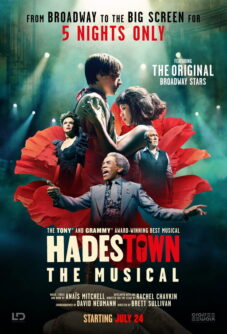
HADESTOWN: THE MUSICAL
A gorgeous Broadway recording — and a thoroughly pagan one.
Should You Watch It?
Here is the decision. This is an official recording of the hit Broadway musical, and as filmed theater it is very good. The cast's vocal abilities are the draw, and the stage itself — elaborate sets, moving parts — does real work rather than merely sitting behind the songs.
The cost is the world it lives in. HADESTOWN retells the doomed love story of Orpheus and Eurydice and blends it with the story of Hades and Persephone, so the air is thoroughly pagan: Greek gods, and fate as the thing that settles how a life turns out. Add 17 uses of "hell," a beating that is not clearly shown, a woman who abuses alcohol to forget her marriage troubles, and a very greedy character who exploits others and forces them to work in horrible conditions.
There is real moral weight here too. Love and forgiveness are the show's actual subjects, and it takes both seriously.
So: if you are an adult who loves musical theater and can watch a myth without mistaking its gods for the truth, this is worth the trip. For children and young teens, it is not.
The Story
NO SPOILERS — WE KEEP THE SURPRISESThe show's narrator, Hermes, introduces us to Orpheus — the son of one of the muses, a romantic who spends his days trying to finish a song that will bring spring back and put the world back in tune.
Then he meets Eurydice, a cynical young woman who has spent her life running away. He falls in love immediately. It takes her a little longer, but she gets there.
Then winter arrives.
Is It Any Good?
Four stars, and the singing earns a good share of them. Each actor showcases amazing singing skills, and a recording of a stage show lives or dies on exactly that.
The staging is the other half. The set is impressively designed and full of moving parts — moving floors, risers and other tools — and they add drama to the story rather than decorating it.
And it is filmed with care. Recorded stage productions can feel like a camera left running at the back of a theater; this one is a beautifully shot version of the popular stage show, and across 141 minutes that difference is the whole reason to watch it on a screen at all.
The Worldview
HADESTOWN: THE MUSICAL has a mixed worldview, and the mixture is not subtle.
The pagan part is the setting itself. This is Greek mythology told as Greek mythology, with Hades, Persephone and Hermes on stage as gods. Running alongside it is a Romantic conviction the show never argues with — fate, embodied in the mythical figures called The Fates, as the thing that settles how a life turns out. That is a different universe from the one Scripture describes.
What it gets right, it gets right about love. Orpheus and Eurydice's love for each other encourages Hades and Persephone to rekindle their marriage — a striking claim about what one couple's devotion can do to another's. And Eurydice forgives Orpheus for not noticing that she had left him. Love and forgiveness are the show's moral center, and both are genuine goods.
It is not naive about power, either. One character is very greedy, exploiting others for his own gain and forcing them to work for him in horrible conditions, and the show puts that plainly on stage. Another drinks to forget her marriage troubles. The word "hell" turns up 17 times.
The story the show keeps returning to is a love that ends in doom. Scripture names a love that does not: "Many waters cannot quench love, neither can floods drown it" (Song of Solomon 8:7).
The Content Guide
The specifics — spoilers included by nature — so you can judge for your own family.
Dominant Worldview and Other Worldview Content/Elements
A mixed worldview with strong Pagan elements, such as the depiction of Greek mythology’s gods Hades, Persephone, Hermes, as well as Romantic elements with the concept of fate. oral elements included as well, such as love, for example, Orpheus and Eurydice’s love for each other encourages Hades and Persephone to rekindle their marriage and forgiveness as Eurydice forgives Orpheus for not noticing she had left him
Foul Language
17 uses of hell
Violence
A character is beaten up, but it is not shown clearly and there is minimal blood shown
Sex
A couple kiss
Nudity
No nudity
Alcohol Use
A character abuses alcohol in an effort to forget about her marriage troubles
Smoking and/or Drug Use and Abuse
No smoking or drug abuse;
Miscellaneous Immorality
character is very greedy, exploiting others for his own personal gain and forcing them to work for him in horrible conditions.
Talk About It
Questions for the drive home, the dinner table, or the youth group.
This story runs on fate, with The Fates themselves among its figures. How is the Christian idea of providence different from fate, and what does that difference do to the way you face a hard year?
Proverbs 16:9 · Ephesians 1:11Eurydice is drawn to the financial stability that Hadestown offers its workers. What are the securities you are most tempted to trade something precious for?
Matthew 6:24 · 1 Timothy 6:9–10One character grows rich by exploiting people and forcing them to work in horrible conditions. What does Scripture say to employers — and to a culture that shrugs at the cost of cheap labor?
James 5:4 · Deuteronomy 24:14–15Eurydice forgives Orpheus for not noticing she had gone. Forgiveness for inattention is oddly hard to give. Who might be waiting on it from you?
Colossians 3:13 · Ephesians 4:32The Final Word
Two hours and twenty-one minutes of extraordinary singing on a stage built to move, all in service of a myth whose gods are not God. Grown-ups who love the form will find a great deal here to admire, and a few things to think carefully about on the way home. Our answer stands: worth the trip — adults only. For family night instead, start with our family-friendly picks.









