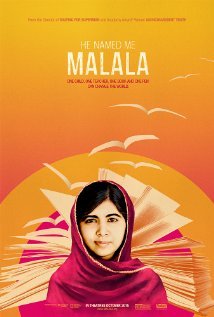
HE NAMED ME MALALA
Informative, engaging—and too vague to rush toward.
Should You Watch It?
Malala Yousafzai’s story is remarkable. She survived a near-fatal shooting by Taliban terrorists and went on to speak internationally for education, especially for girls. The documentary is informative and engaging, and it presents her family’s affection and support with some lighthearted warmth.
The cost is clarity. The film treats education as a broad answer to global problems without explaining clearly what education is meant to accomplish. It also presents a strong Romantic, somewhat liberal worldview and does not offer a God-centered argument for morality or education.
This is a story worth discussing, but the documentary’s generalities make it better suited to a thoughtful home viewing than an urgent family trip to the theater. Choose WAIT FOR HOME, especially for younger viewers.
The Story
NO SPOILERS — WE KEEP THE SURPRISESHE NAMED ME MALALA follows Malala Yousafzai, a Pakistani teenager who survived a Taliban shooting in 2012. The documentary traces her life, family, recovery, and growing international advocacy for education, especially for girls.
Her father, who founded schools in Pakistan’s Swat Valley, encouraged her love of learning and her willingness to speak publicly. The film also visits Malala’s family in Birmingham, England, as she continues her work.
Is It Any Good?
Three stars means this is a worthwhile but incomplete documentary. It is informative and engaging, with lighthearted family interviews that give Malala’s public story a personal dimension.
The film is not as dramatic as it could have been. The review argues that Malala’s story would have benefited from a clearer three-act structure, with stronger emphasis on the shooting, her recovery, and the suspense surrounding her later international recognition. The result is interesting and meaningful, but less powerful than the material deserves.
The Worldview
The documentary rightly opposes terrorism, political violence, and the Taliban’s efforts to stop girls from attending school. It also presents Malala as a Muslim who speaks against Muslim radicals. Her family’s support and her advocacy for children’s education give the film a solid moral component.
But the film remains vague about what “education” means and why it matters. It presents education as a broad remedy for global reform without defining its purpose or explaining how education should shape the heart, soul, and moral conscience. The review describes the film’s outlook as Romantic, somewhat liberal, and lightly feminist. It also notes implied support for government action to make education safe and affordable, alongside support for the father’s privately established schools.
The documentary’s central question is therefore also its weakness: education in what, and education for what? Scripture says, “The fear of the LORD is the beginning of knowledge” (Proverbs 1:7). Learning matters, but biblical wisdom begins with God.
The Content Guide
The specifics — spoilers included by nature — so you can judge for your own family.
Content Summary
Strong Romantic, somewhat liberal and lightly feminist, worldview promoting in a general and vague way, with few details, access to “education” for all boys and girls, especially girls, throughout the world, plus movie reports girl and her family are Muslim, but it also speaks out against Muslim radicals, terrorism and political violence, so there’s a solid moral component, though movie again is rather vague on details and provides no God-centered argument for morality or even its definition of education, plus some possible implied socialism that seems balanced, however, by a more definite implied capitalism (also, there’s a brief mention of “God” and one mention of Allah, plus Muslim calls to prayers are heard once during a brief scene shot in a Pakistani city); no obscenities but one light Oh, G-d profanity; light violence includes some animated violence when relating the history of a battle in the 1880s, animated bombings, explosions in the distance, discussion of a disturbing attempted Muslim terrorist assassination of an outspoken female teenager that also wounded two other teenage girls, some very light bloody images of a wounded girl being wheeled into an ambulance, hospital and operating room, and discussion of Islamic Taliban terrorists bombing schools in Pakistan; no sex but teenage girl is bashful about finding a cricket celebrity handsome and seeing photos of him, Brad Pitt and other male celebrities on the Internet and girl is briefly questioned about boys but she’s embarrassed to discuss her interest in boys, but there’s nothing salacious; no nudity; no alcohol use; no smoking or drugs; and, discussion of an evil Islamic Taliban leader’s attempt to control an area in Pakistan, a mention of “fate,” and documentary is a little too vague about the agenda of its title subject and her father, who may or may not have been more explicit with the filmmakers behind the scenes or off camera.
Talk About It
Questions for the drive home, the dinner table, or the youth group.
The documentary asks what education is for. How should knowledge shape a person’s character and choices?
Proverbs 1:7 · Romans 12:2Malala speaks against terrorism and violence directed at girls. What does Scripture require of people who have power over the vulnerable?
Micah 6:8 · James 1:27The film presents education as a possible answer to global problems. What can education accomplish, and what can only God change in the human heart?
Jeremiah 17:9 · Ezekiel 36:26How can your family support children’s access to learning while also seeking wisdom and truth?
Proverbs 2:6 · Philippians 4:8The Final Word
Malala’s courage and advocacy are worth taking seriously, and the documentary is informative and engaging. But its central message about education remains too general, and its worldview needs thoughtful discernment. Watch it at home, where you can discuss both its strengths and its unanswered questions. WAIT FOR HOME.