
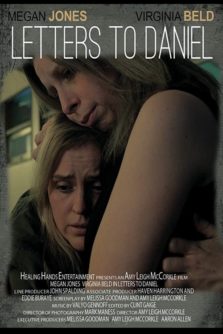
LETTERS TO DANIEL (2020)
A heartfelt mental-health story held back by rough execution.
Should You Watch It?
LETTERS TO DANIEL offers a personal look at grappling with mental-health struggles, especially bi-polar disorder. Its strongest material is moral and relational: friendship survives conflict, forgiveness is valued, kindness is encouraged, and people stand by one another through hardship. The Christian elements are overt, including a God-fearing grandmother, church and Scripture references, and Christian music over the end credits.
The limitation is the filmmaking. Some dialogue is difficult to hear, and the production lacks the polish of a traditional Hollywood movie. Heated arguments and brief foul language also call for parents’ discernment.
If these themes matter to you, LETTERS TO DANIEL may be worth discussing at home; for most families, wait to watch it at home.
The Story
NO SPOILERS — WE KEEP THE SURPRISESIn 1999, aspiring filmmakers Amy and Missy move from Kentucky to Austin, Texas, hoping to make a movie together. Their finances are low, their plans falter, and their friendship faces growing strain.
Amy also struggles with bi-polar disorder and other health issues, including insomnia. She writes letters to British actor Daniel Craig, using them to process her emotions, her changing hopes, and the events unfolding around her.
Is It Any Good?
Two stars means a sincere story whose execution often gets in the way. The film is told in chapters, with the chapter titles and brief descriptions helping viewers follow the timeline. The voice-over narration is done well, and the themes of friendship and the need for a creative outlet are sobering.
The production, however, is lackluster. Dialogue in scenes between the narration can be hard to hear, and there are continuity or period goofs, including later movies displayed in a theater scene set in 1999. The result is a personal and meaningful drama that could have been more polished.
The Worldview
LETTERS TO DANIEL promotes kindness, helping friends, forgiveness, and perseverance through mental-health struggles. Amy and Missy apologize after wrongdoing and remain committed to each other through serious difficulties. The film also presents a Christian grandmother who openly holds to her beliefs, a Christian funeral in a church, a reference to God resting on the Sabbath, and Christian music over the end credits.
The film’s Christian influence is hopeful, but it is not fully consistent in its theology. The protagonist refers to relying on “the Universe” rather than God. Even so, the Christian influences around her encourage her to look at life’s brighter side. The film presents friendship as a source of support when life becomes difficult, aligning with the biblical call to “Bear one another’s burdens” (Galatians 6:2).
The Content Guide
The specifics — spoilers included by nature — so you can judge for your own family.
Content Summary
Strong Worldview and Other Worldview Content/Elements: Strong moral worldview, with some strong, overt, positive Christian elements, about coping with bi-polar disorder, sticking by one another through thick and thin, forgiveness is extolled, protagonist’s grandmother is a God-fearing Christian, there’s a Christian funeral in a church, there’s a mention of God resting on the Sabbath, Christian music plays over the end credits, and kindness to strangers is extolled, but protagonist makes a comment about relying on “the Universe” instead of God
Foul Language
Eight mostly light obscenities (including one “f” word and one “s” word) and five light OMG
Violence
Light violence when woman breaks a glass in a moment of frustration, and woman with bi-polar disorder makes a death threat but apologizes quickly afterwards
Sex
No sex scenes or sexual immorality, but a doctor asks a patient is she’s sexually active, and she says “no,” and a dating couple kisses on the mouth
Nudity
No nudity
Alcohol Use
No alcohol use, but doctor asks a patient if she abuses alcohol, and she says no
Smoking and/or Drug Use and Abuse
No smoking or illegal drug use or abuse, but a doctor prescribes some anti-depressants to a patient with bi-polar disorder;
Miscellaneous Immorality
Dysfunctional family portrayals, some rudeness and a character says, “Get off the cross; someone needs the wood.”
Talk About It
Questions for the drive home, the dinner table, or the youth group.
Amy uses writing to process difficult emotions. What healthy ways can we use to bring our struggles into the light?
Psalm 34:18 · Philippians 4:6–7Amy and Missy hurt each other but continue working through their friendship. What does forgiveness look like when someone has spoken or acted wrongly?
Ephesians 4:32 · Colossians 3:13The story includes Christian influences alongside a reference to relying on “the Universe.” Why does it matter whom we trust in difficult times?
Psalm 46:1 · Proverbs 3:5–6How can we support a friend who is struggling with mental-health issues while also encouraging appropriate help?
Galatians 6:2 · Romans 12:15The Final Word
LETTERS TO DANIEL has a hopeful moral center and meaningful Christian elements, but its uneven sound and lack of polish make it better suited to a home discussion than a family outing. For this one, WAIT FOR HOME. Looking for a stronger family choice? Start here:.









