
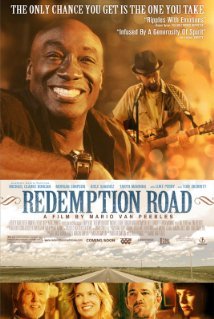
REDEMPTION ROAD
A strong forgiveness message arrives wrapped in grown-up content.
Should You Watch It?
REDEMPTION ROAD has a wonderful message about forgiveness. It is also clear about the evils of intoxication, showing that much of the suffering requiring forgiveness comes from destructive behavior connected to drinking and substance abuse. Its Christian references and scenes honoring God give the film a meaningful moral center.
But the film displays the behavior calling for forgiveness too strongly for a family movie night. Its language, drinking, drugs, smoking, and other mature material call for discernment. The redemptive climax also soft-pedals God’s role, making the movie’s strongest spiritual opportunity feel incomplete.
Watch it at home, where discerning adults can control the experience and discuss its message.
The Story
NO SPOILERS — WE KEEP THE SURPRISESJefferson Bailey, the son of a popular blues musician, drinks heavily, struggles with stage fright, loses his day job, and faces trouble because of debt and an inappropriate friendship. Then a stranger named Augy invites him to travel from Austin, Texas, to Huntsville, Alabama, to receive an inheritance from his recently deceased grandfather.
Jefferson leaves with Augy to escape his problems. As they travel, the two gradually become friends.
Is It Any Good?
Three stars means REDEMPTION ROAD is a good but uneven drama. The acting and production quality are good, and Michael Clark Duncan is impressive and likable as Augy. He has a powerful screen presence.
The movie moves slowly in spots, and it can be difficult to care deeply about what happens to Jefferson. The film’s message about forgiveness is stronger than the revenge promoted in many movies, but its execution feels like a missed opportunity.
The Worldview
REDEMPTION ROAD places forgiveness at the center of its story and strongly condemns intoxication. It shows that bad behavior can produce suffering that requires forgiveness, and it even pays homage to Alcoholics Anonymous. Christian references appear throughout, including a church service featuring “Oh Happy Day” and “Jesus on the Mainline.”
The film’s moral vision is weakened by its graphic display of the behavior needing forgiveness. Its use of drugs, alcohol, and foul language aims for “pseudo-realism,” while its treatment of God’s role in redemption is less realistic and less complete. God is honored in a few spots, but His role is soft-pedaled in the climax. The movie presents forgiveness as better than revenge, yet it does not clearly show redemption as requiring the saving grace of Jesus Christ.
The film’s central longing is for forgiveness after destructive choices. Scripture calls believers to forgive because they themselves have received forgiveness: “forgiving each other; as the Lord has forgiven you, so you also must forgive” (Colossians 3:13).
The Content Guide
The specifics — spoilers included by nature — so you can judge for your own family.
Content Summary
The movie has a Christian/Biblical worldview in conflict with pagan elements where forgiveness is the primary subject of the movie but the behavior calling for forgiveness is graphically displayed; 17 obscenities, one profanity; man threatens with knife, man shoots and kills someone; implied sexual involvement with someone else’s wife; no nudity; heavy drinking and drunkenness but this is roundly condemned and very bad consequences of this behavior are clearly shown; smoking and drug use; and, general bad character needing but finding redemption, cheating and walking out on a debt.
Talk About It
Questions for the drive home, the dinner table, or the youth group.
The film presents forgiveness as better than revenge. What makes forgiveness difficult, and why does Scripture connect our forgiveness of others with God’s forgiveness of us?
Colossians 3:13 · Ephesians 4:32The characters’ destructive choices create suffering that calls for forgiveness. How are remorse, changed behavior, and forgiveness related?
2 Corinthians 7:10 · Luke 3:8The movie condemns intoxication and shows its consequences. How can Christians respond wisely when a friend’s choices are harming others?
Galatians 6:1–2 · Proverbs 27:5–6God is honored in parts of the film but soft-pedaled in its redemptive climax. What does Scripture say redemption ultimately requires?
Ephesians 1:7 · Titus 2:11–12The Final Word
REDEMPTION ROAD offers a genuinely worthwhile message about forgiveness and good performances, especially from Michael Clark Duncan. But its strong language and mature behavior, along with its incomplete treatment of God’s role in redemption, make it better suited to discerning adults at home. WAIT FOR HOME — ADULTS ONLY. For other choices, see.









