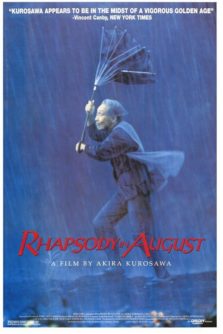
RHAPSODY IN AUGUST
A magnificent, moving family drama that leaves history unfinished.
Should You Watch It?
Akira Kurosawa’s film is a gentle, deeply moving look at the bonds within a Japanese family after the bombing of Nagasaki. Its grandmother, children, parents, and Japanese-American relatives carry the tragedy in different ways. Their stories give the film emotional power without turning it into a simple sentimental exercise.
The film’s weakness is moral and historical. It presents the horror of the atomic bomb but does not give comparable attention to the suffering caused by Imperial Japan during World War II. It also gestures toward social harmony without reaching the deeper reconciliation that requires forgiveness, repentance, and grace.
If you want exceptional filmmaking and compassionate human drama, WORTH THE TRIP. Watch with adults or mature family members who can discuss what the film remembers—and what it leaves out.
The Story
NO SPOILERS — WE KEEP THE SURPRISESDuring a summer visit to their grandmother in contemporary Japan, four young cousins begin learning about the atomic bombing of Nagasaki and its effect on their family. Their parents are visiting relatives in Hawaii, including a wealthy Japanese-American uncle.
As the children uncover painful family history, they must consider what their elders remember, what they hide, and how the past continues to shape the present.
Is It Any Good?
Four stars means Kurosawa’s filmmaking is a major strength. The performances are extraordinary, especially Sachiko Murase as the grandmother. The film also offers exceptional imagery: stories told under moonlight, the bomb’s “giant eye in the sky,” and a powerful storm sequence.
Kurosawa creates stunning images, moving characters, and brilliant acting performances. The film is gentle and emotionally rich, with a compassionate humanist perspective. Its historical and spiritual limitations keep its achievement from being complete, but the craft itself is outstanding.
The Worldview
The film approaches the bombing of Nagasaki through compassionate humanism. It sees the good within struggling, weak people and portrays the suffering carried by a Japanese family across generations. The children learn about the bomb’s terrible effects, while the adults struggle with embarrassment, memory, and the desire to avoid offending their Japanese-American relatives.
The film’s central historical weakness is its lack of balance. It never addresses the “rabid Japanese fascism” that led to the bombing or the deaths and destruction suffered by Chinese, Koreans, Indonesians, and Americans under Imperial Japan during World War II. Its account of reconciliation is also incomplete. Social harmony arrives, but the film does not deal with sin, repentance, forgiveness, or grace as the means of healing its consequences.
The film passionately seeks human understanding, but it leaves its characters struggling against forces they cannot fully understand. Scripture gives a deeper account of reconciliation: “Be kind to one another, tenderhearted, forgiving one another, as God in Christ forgave you” (Ephesians 4:32).
The Content Guide
The specifics — spoilers included by nature — so you can judge for your own family.
Content Summary
A compassionate Japanese view of the effects of the nuclear bomb dropped on Nagasaki that does not take into consideration the rabid Japanese fascism that led to this drastic measure.
Talk About It
Questions for the drive home, the dinner table, or the youth group.
The children learn that their family has carried painful memories of Nagasaki. Why might people try to hide painful parts of the past, and when can truthful remembrance help healing?
Psalm 78:4 · John 8:32The film presents social harmony but does not fully address forgiveness. How is biblical forgiveness deeper than simply ending an argument or restoring polite relationships?
Ephesians 4:32 · Colossians 3:13What happens when a historical story remembers one group’s suffering but leaves out the suffering caused by that group? How should Christians pursue truth and humility when remembering history?
Proverbs 18:17 · Philippians 2:3–4The grandmother remains troubled by memories she cannot fully understand. Where does Scripture direct people who carry grief, fear, or guilt?
Psalm 34:18 · 1 Peter 5:7The Final Word
Kurosawa’s Rhapsody in August is beautifully acted, visually unforgettable, and compassionate toward a family carrying the wounds of war. Its historical account is incomplete, and its reconciliation never reaches forgiveness, repentance, and grace. For adults and mature families ready to discuss both its beauty and its omissions, the answer is WORTH THE TRIP.