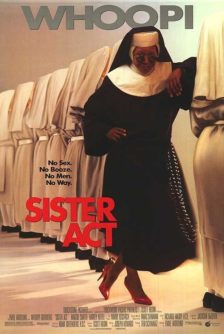
SISTER ACT
A joyful, redemptive comedy about forgiveness, sacrifice, and finding your true voice.
Should You Watch It?
Yes—especially if you want a warm, funny film whose central message is genuinely redemptive. Sister Act shows a selfish woman discovering her true self as she puts others before herself. It also celebrates Christian forgiveness, unconditional acceptance, self-sacrifice, and the joy of praising God together.
The movie does not hide the fallen world Delores comes from. Its opening includes criminal violence, an adulterous relationship, obscenities, and other worldly behavior. That material makes the film unsuitable for little children and may trouble pietists, but teens and adults can find much to celebrate in the transformation that follows.
If your family includes middle schoolers or older viewers who can handle the content, this is worth the trip.
The Story
NO SPOILERS — WE KEEP THE SURPRISESDelores, a nightclub singer in a Reno casino, witnesses her married boyfriend, Vinnie, shoot a man. She runs to the police, who place her in witness protection at St. Katherine’s Convent, a struggling convent in an inner-city San Francisco neighborhood.
There, Delores must exchange the spotlight and her old life for discipline, community, and a very different kind of singing.
Is It Any Good?
Four stars means this film delivers fully on its comic and emotional promise. The result is a redemptive romp with a heart-warming sound that may reach even the most stiff-necked sophisticate.
The movie’s greatest strength is the way its characters come alive through music and service. Delores restores the convent’s choir and revives morale, while the nuns learn to reach out to their community. The joy feels earned because the film connects celebration with changed lives.
The Worldview
Sister Act presents Christian forgiveness, unconditional acceptance, and self-sacrifice as forces that overcome adversity. Delores begins as a selfish woman shaped by a fallen world, but discipline and community help her put others before herself. In turn, the nuns move beyond isolation, reach out to their neighborhood, and experience a renewed faith.
The film also portrays wrongdoing honestly. Murder, adultery, police corruption, disrespect for elders, sexualized behavior, and careless handling of Bible verses are part of its world. Those elements do not erase the movie’s redemptive message, but they are why younger children and especially pietists may not be the right audience.
At its center, the film believes that real celebration comes through worship and shared life. As Delores says, “This is rejoicing. We are singing to the Lord.” Scripture likewise calls God’s people to “serve the LORD with gladness! Come into his presence with singing!” (Psalm 100:2).
The Content Guide
The specifics — spoilers included by nature — so you can judge for your own family.
Content Summary
Biblical messages of forgiveness, unconditional acceptance, & self-sacrifice overcoming adversity marred by: 11 obscenities; murder, punching thugs in their groins in self-defense to get away, chase scenes, fights, & holding nuns hostage; implied adultery, nude sculptures, suggestive dance moves, cleavage, & sexual innuendo; bar scenes; police corruption, disrespect for elders; and, and, jumbling Bible verses out of ignorance in a make-shift prayer.
Talk About It
Questions for the drive home, the dinner table, or the youth group.
Delores begins by thinking mostly of herself. What changes when she starts putting others before herself?
Philippians 2:3–4 · Mark 10:45The film connects Christian forgiveness with overcoming adversity. What does forgiveness require, and how is it different from pretending wrong never happened?
Ephesians 4:32 · Colossians 3:13The nuns’ faith comes alive as they reach out to their community. Who around you might need welcome, encouragement, or practical help?
Hebrews 13:2 · Galatians 6:10Delores calls singing to the Lord “rejoicing.” What does joyful worship look like when life is difficult?
Psalm 100:1–2 · Philippians 4:4The Final Word
Sister Act is a funny, moving celebration of forgiveness, self-sacrifice, community, and Christian joy. Its opening reflects a fallen world, so it is not for little children or pietists. For teens and adults who can handle those concerns, the answer is clear: WORTH THE TRIP — TEENS AND ADULTS.