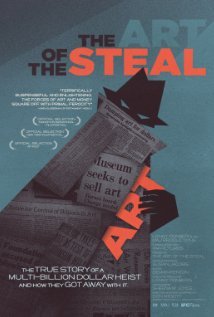
THE ART OF THE STEAL
A politically charged art-world power struggle for discerning adults.
Should You Watch It?
The Art of the Steal is an interesting documentary about the Barnes Foundation, a famous art school and museum in Philadelphia. Its collection includes about $25 billion in Impressionist, Post-Impressionist, and Modern art. The film examines the long struggle between Albert C. Barnes and the political and cultural establishment over who should control that collection and school.
The documentary offers a troubling look at how outside forces can use political and cultural power to reshape one person's legacy. But its presentation is one-sided, its political messaging leans left, and it includes brief but strong profanity. The film also praises socialist ideas and attacks a rich Republican, Jewish philanthropist in ways the review finds unfair.
So, if you are a discerning adult who can weigh a partisan documentary critically, it is worth watching. It is not appropriate for children or young teens.
The Story
NO SPOILERS — WE KEEP THE SURPRISESAlbert C. Barnes, a pharmaceutical inventor and art enthusiast, built a collection featuring works by Van Gogh, Renoir, Picasso, Matisse, Monet, and others. He formed an art school around it and left the collection and school to a small local Black college.
The documentary follows the decades-long battle that began after Barnes died in 1951, as political leaders, cultural institutions, and foundations sought control of his foundation and collection.
Is It Any Good?
Three stars means an interesting documentary with real subject matter, but also significant limitations. The film provides insight into how outside forces can damage one man's life's work, and it details a complicated conflict involving art, politics, money, race, and institutional power.
Its weakness is its one-sided presentation. The filmmakers fail to connect the film's own evidence about the liberal establishment's role in the controversy, while attacking Walter Annenberg with little critical thought or research. The documentary also promotes John Dewey's progressive education theories and contains uncensored profanity.
The Worldview
The film presents a strongly political account of the Barnes Foundation controversy. It sympathizes with radical cultural leaders who oppose the political and cultural establishment, while also criticizing liberal leaders who are not radical enough. Its treatment of capitalism, socialism, and political power is framed from the left, and its attack on Walter Annenberg is presented as politically correct and one-sided.
The documentary condemns double-dealing by powerful institutions, but the review finds that it does not recognize its own hypocrisy or partiality. It also praises socialist figures and progressive philosopher John Dewey. The film can still expose a genuine danger: outside forces may use stealthy means to take over an institution and pervert its original mission.
The deeper question is what happens when pride, power, and legacy replace humility and faithful stewardship. Scripture says, “God opposes the proud but gives grace to the humble” (James 4:6).
The Content Guide
The specifics — spoilers included by nature — so you can judge for your own family.
Content Summary
Very strong Romantic worldview with some overt pro-socialist, anti-capitalist sentiments expressed as radical cultural leaders attack the political and cultural “establishment” in Pennsylvania and Philadelphia, including liberal leaders who apparently aren’t radical enough for them, plus some politically correct slander hurled at a rich Republican, Jewish philanthropist who apparently disliked the movie’s dead hero; eight obscenities (including two “f” words and several “s” words) and one GD; no violence; no sex; old nude paintings showing the female form; no alcohol; no smoking or drugs; and, double-dealing condemned but not the movie’s own hypocrisy and one-sided presentation, which briefly lauds a couple dead socialists, including progressive, “pragmatic” philosopher John Dewey.
Talk About It
Questions for the drive home, the dinner table, or the youth group.
The film examines what happens when powerful institutions take control of another person's work. What does Scripture teach about handling authority and another person's property?
Luke 16:10–12 · 1 Peter 5:2–3The documentary presents a conflict between competing political and cultural groups. How can you pursue truth when every side claims to be the righteous one?
Proverbs 18:17 · James 1:19–20The film condemns double-dealing while offering a one-sided presentation. Why should Christians examine their own conduct before judging others?
Matthew 7:3–5 · Romans 2:1Barnes' legacy raises questions about pride, control, and what we leave behind. What would faithful stewardship look like in your own work or possessions?
Matthew 6:19–21 · 1 Corinthians 4:2The Final Word
This is an interesting, politically charged documentary with a valuable warning about power seizing control of another person's legacy. Its one-sided worldview and brief but strong language require adult discernment. For discerning adults, the answer is WORTH THE TRIP — ADULTS ONLY. For family viewing, choose from.