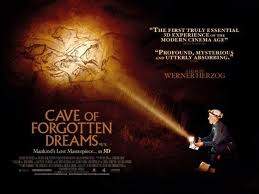
THE CAVE OF FORGOTTEN DREAMS
Beautiful cave art, troubling ideas — for discerning adults.
Should You Watch It?
This documentary offers rare access to the Chauvet Cave in France, where ancient paintings, animal bones, footprints, and handprints have been preserved for thousands of years. Its images are gorgeous and unique. Glittering calcite-covered skulls, bones, paintings, and relics make the cave a remarkable subject for 3D exploration.
The problem is the movie’s interpretation of what it sees. Herzog and the scientists repeatedly connect the cave to pagan rituals, shamans, mystical spirits, New Age ideas, and evolutionary theories. The ending turns especially bleak, presenting humanity as small, temporary, and ultimately forgotten.
If you are a discerning adult interested in the subject, the film may be worth seeing for its visual beauty and cultural importance. Watch it knowing that its worldview is mixed and often hostile to Christian convictions.
The Story
NO SPOILERS — WE KEEP THE SURPRISESWerner Herzog and a tiny crew receive rare access to France’s Chauvet Cave, discovered in 1993. The cave’s paintings are more than twice as old as those found in any other known cave.
Scientists, anthropologists, art historians, geologists, and others explore the sealed cave and study its paintings, bones, footprints, and other relics. Herzog considers what these discoveries might reveal about the artists who created them and the people who lived so long ago.
Is It Any Good?
Three stars means this is a visually beautiful and worthwhile documentary with significant weaknesses. The cave paintings, animal bones, skulls, and other relics are presented in glittering, sparkling detail. Herzog’s opening, with Gregorian chants, choral singing, and his gravelly narration over the French countryside, creates a haunting atmosphere.
The film also includes thoughtful interviews and fascinating observations about the cave’s animals, paintings, and preservation. However, it has slow moments, and the ending is confusing, abrupt, and doctrinal. Its beauty and subject matter make it worth considering, but its uneven presentation keeps it from being more than a good documentary.
The Worldview
The film’s strongest feature is its positive exploration of a genuinely unique cultural artifact. The cave paintings and preserved relics testify to the creativity and mystery of ancient human life. The documentary also presents a striking observation that the appearance of modern human spirit seems sudden rather than the result of a slow evolution of man.
Yet the movie quickly moves away from that implication. It interprets a partial bison image as a Paleolithic Venus or fertility goddess, treats a cave bear skull as a possible sacrifice, and suggests charcoal may have been incense. Scientists and filmmakers repeatedly read pagan ideology, shamanism, mystical spirits, and New Age concepts into the cave and its evidence.
The film also makes strong humanist and pro-evolutionary claims. It connects humanity to the landscape, animals, tradition, behavior, and history while minimizing humanity’s lasting significance. The conclusion portrays people as short-lived and inconsequential, with their lives ultimately washed away by time. Its final idea — “Nothing is real. Nothing is certain.” — directly conflicts with Christian confidence in God’s creation and truth.
Scripture gives human beings a greater dignity and a firmer hope: “What is man that you are mindful of him, and the son of man that you care for him?” (Psalm 8:4).
The Content Guide
The specifics — spoilers included by nature — so you can judge for your own family.
Content Summary
Very strong, somewhat mixed, pagan worldview about a newly discovered cave painting, with false pagan mysticism, New Age paganism, strong humanist pro-evolutionary comments, and other Non-Christian elements combined with a positive exploration of a genuinely unique cultural artifact which also suggests mankind is not as old as the atheists and pro-evolution “scientists” think he is (though the movie skips over that obvious conclusion); no foul language; no violence; no sex; female nudity depicted in art and sculpture; and, moral relativism and some propagandistic aspects.
Talk About It
Questions for the drive home, the dinner table, or the youth group.
The film presents ancient art as evidence that modern human spirit appeared suddenly. How does the Bible describe humanity’s beginning and dignity?
Genesis 1:26–27 · Psalm 8:3–6The documentary connects cave artifacts with fertility gods, shamans, and mystical spirits. How should Christians respond when a film treats spiritual ideas as truth?
Deuteronomy 18:10–12 · 1 John 4:1The film portrays human lives as temporary and easily forgotten. Where does Scripture locate lasting meaning and hope?
Ecclesiastes 12:13–14 · John 11:25–26The cave paintings are presented as evidence of human creativity. What does human creativity reveal about being made in God’s image?
Genesis 1:27 · Ephesians 2:10The Final Word
This is a beautiful, haunting documentary about an extraordinary cultural artifact. Its pagan mysticism, evolutionary claims, humanism, and bleak view of humanity require serious discernment. For adults who remain interested in the subject, WORTH THE TRIP — ADULTS ONLY. For a different family choice, see.