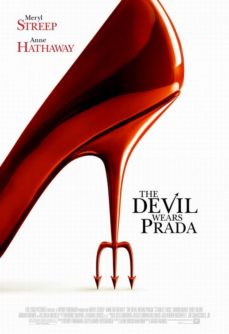
THE DEVIL WEARS PRADA
Sharp, funny dialogue can't rescue a moral turn that comes too late.
Should You Watch It?
Here's the honest tally. The Devil Wears Prada is genuinely funny — the dialogue crackles, especially anything Meryl Streep says as the tyrannical Miranda Priestly, and the cast (Streep, Anne Hathaway, Emily Blunt) is doing real work. That's the case for watching it.
Here's the case against. The film hands its heroine, Andy, a real inner struggle between integrity and ambition — and then lets her lose that struggle for nearly the whole runtime before a last-minute change of heart that arrives without cost or consequence. Along the way you get implied premarital sex treated as normal, a drunken seduction, party drinking, and a worldview where fame, money, and getting ahead outrank character.
If you're an adult who wants a smart, cynical comedy and can watch its moral drift with eyes open, it's worth a watch — just not in a theater seat with the whole family, and not as a movie to hand your teenager without a long conversation afterward. This is one for the queue at home, adults only.
The Story
NO SPOILERS — WE KEEP THE SURPRISESAndy Sachs wants to be a New York journalist. Instead, she lands a job as second assistant to Miranda Priestly, the ruthless, universally feared editor of a top fashion magazine — a boss who runs over anyone in her way. Andy takes the job as a stepping stone, certain it won't change who she is. The fashion world has other plans.
Is It Any Good?
Three stars means this: a genuinely well-made comedy with a few real problems. The dialogue is the film's engine — Streep's scenes especially are laugh-out-loud sharp, and you need to lean in to catch every jab. Streep is masterful as Miranda, playing a woman who loves her own power enough that you can't quite hate her. Emily Blunt is just as good as the nastier assistant, and Anne Hathaway is believable as Andy, though she overacts here and there.
Where the film falters is structure and payoff. Andy's arc — losing herself, then supposedly finding her way back — resolves so late and so quickly that it doesn't feel earned. The result is a movie that's enjoyable scene by scene but strangely emotionless by the end, leaving you wondering what the point of the journey was.
The Worldview
This film runs on a thoroughly pagan operating system: money, fame, status, and doing whatever feels good in the moment are treated as the things worth having. Andy is meant to be the audience's moral center, wrestling with whether to sacrifice her integrity for success — but she gives in far more than she resists, and her eventual course correction comes so late in the story that it fails to counterbalance everything that came before. Miranda, by contrast, never wavers; she remains willing to demolish anyone who crosses her, and the film lets her mostly get away with it.
The film also carries some feminist themes and includes a homosexual character. And its treatment of sexuality is casual rather than thoughtful — Andy's live-in relationship with her boyfriend is presented as unremarkable, even affirmed by a visiting parent, and later complicated by an affair that the story never really holds her accountable for.
To its credit, the film does correctly diagnose something true: that chasing fame and success can cost you your character, your relationships, and your sense of self. It just doesn't follow that diagnosis to a real reckoning. Scripture is far more direct about the trade the film only gestures at: "For what will it profit a man if he gains the whole world and forfeits his soul?" (Matthew 16:26).
The Content Guide
The specifics — spoilers included by nature — so you can judge for your own family.
Content Summary
Strong pagan worldview overall with money, fame and personal needs depicted as being of paramount value, plus strong moral depiction of inner struggle for success and admiration, money and fame versus living a life of genuine relationship with integrity, plus some feminist themes and a homosexual character; six obscenities and one profanity; mild violence as girl is hit by a car, and much emotional abuse as characters are demeaned; implied fornication three times and depicted seduction scene where woman is drunk; no nudity but woman takes off shirt showing lingerie in order to seduce boyfriend, and woman gets dressed, but no exposure occurs; alcohol use depicted in party scenes and woman shown drunk; smoking; and, immoral tones in woman living with her boyfriend, depiction of premarital sex as socially and morally acceptable (even to parent), goal of success and fame depicted as paramount over character and integrity, and anything to become successful goes.
Talk About It
Questions for the drive home, the dinner table, or the youth group.
Andy tells herself she can take this job without it changing who she is. Where in your own life have you underestimated how much an environment can shape you?
Proverbs 4:23 · 1 Corinthians 15:33Miranda never faces real consequences for how she treats people, and the film doesn't punish her for it. Does that match how you think the world actually works — or how Scripture says it works?
Galatians 6:7 · Ecclesiastes 8:11–13Andy's change of heart comes very late in the story. What's the difference between genuinely turning back and simply running out of road?
Luke 15:17–20 · 2 Corinthians 7:10The movie treats living together and premarital sex as unremarkable, even normal. How do you talk with your family about why Scripture describes a different design for sex and marriage?
1 Corinthians 6:18–20 · Hebrews 13:4The Final Word
There's real craft here — Streep alone makes this worth admiring as filmmaking — but the story it tells lets its heroine's conscience arrive too little, too late, wrapped around content that demands real caution. Our answer stands where we opened: wait for home — adults only. Looking for something to watch as a family instead? Start here:.