
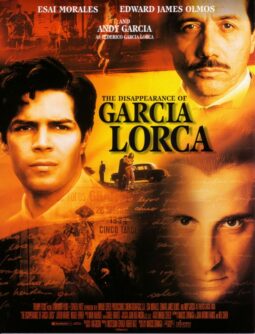
THE DISAPPEARANCE OF GARCIA LORCA
A beautiful, overwrought search for a poet’s killers — and a squandered opportunity.
Should You Watch It?
The source review finds a potentially fascinating story here: a young journalist returns to 1954 Spain to investigate the murder of the poet Federico Garcia Lorca, whose life and death have become objects of near-religious devotion. The film is also photographed with astonishing beauty.
But the opportunity is badly squandered. The story lurches between time periods, the dialogue is wooden, the plot relies on contrivances, and the violence is thoroughly unpleasant. The reverence directed toward Garcia Lorca turns him into a secular saint rather than a fully compelling figure, leaving the drama pretentious and ultimately uninvolving.
Its R rating includes 10 obscenities, one profanity, multiple beatings and shootings, execution-style murders, a man gored repeatedly by a bull, fornication, frontal female nudity, alcohol, and smoking. For your family or your own viewing, the practical answer is simple: skip this one.
The Story
NO SPOILERS — WE KEEP THE SURPRISESIn war-torn Spain during the mid-1930s, teenage Ricardo Fernandez becomes fascinated with the celebrated poet and dramatist Garcia Lorca. Years later, Ricardo returns to Spain from Puerto Rico as an eager journalist determined to discover who murdered the man he idolized.
Dire warnings, police pressure, military opposition, beatings, and intriguing leads stand between Ricardo and the truth. The search takes him through a country still ruled by Fascists and into a dangerous confrontation.
Is It Any Good?
Two stars means the film has some striking qualities but fails overall. Its photography is astonishingly beautiful, giving the movie a visual power that temporarily masks its many miscalculations.
The storytelling, however, is pretentious and ultimately uninvolving. The plot flops back and forth between time periods, the dialogue is shockingly wooden, and contrivances overwhelm the drama. The violence is thoroughly unpleasant, while the performances and poetic treatment do not make Garcia Lorca’s importance emotionally convincing.
The Worldview
The film presents Garcia Lorca as a secular saint and towering hero who paid the ultimate price for spreading Truth and Beauty in a repressive society. Its humanist worldview has Communist underpinnings, and it positively portrays an atheistic tirade within a national socialist/fascist society. The source review sees this as a distortion of what could have been a cautionary account of Spain’s tragic conflict.
The film’s treatment of Garcia Lorca is reverential rather than searching. It also suggests an unnerving enthusiasm from Garcia Lorca toward adolescent Ricardo. The result is not a balanced portrait but a work that asks viewers to admire its central figure without making clear why he inspired such an uproar.
The review connects the violence and terror of 1930s Europe with nations that abandoned God and His laws. Scripture gives a more direct warning: “For the wrath of God is revealed from heaven against all ungodliness and unrighteousness of men” (Romans 1:18).
The Content Guide
The specifics — spoilers included by nature — so you can judge for your own family.
Content Summary
Humanist worldview with Communist underpinnings including a positive portrayal of an atheistic tirade by a character set in a national socialist/fascist society; 10 obscenities & 1 profanity; multiple beatings & shootings including execution-style murders & man gored repeatedly by a bull; brief depiction of fornication; brief frontal & real female nudity; alcohol use throughout; and, smoking
Talk About It
Questions for the drive home, the dinner table, or the youth group.
The film presents a human being as a secular saint. What is the difference between honoring someone’s gifts and giving a person the devotion that belongs to God?
Exodus 20:3 · Isaiah 42:8The story unfolds under repression and violence. How should Christians respond when governments or movements use fear to control people?
Romans 12:17–21 · 1 Peter 2:13–17The film includes an atheistic tirade. How can you listen carefully to claims about God while testing them against Scripture?
Acts 17:10–11 · 1 Thessalonians 5:21The review says an opportunity to tell a cautionary tale was squandered. What makes a story about historical suffering truthful and morally serious?
Micah 6:8 · Ephesians 5:11The Final Word
Beautifully photographed but wooden, contrived, violent, and spiritually confused, this drama fails to make its central figure compelling. For discerning adults, there are better ways to engage this history and its questions. Our verdict is SKIP IT. For alternatives, see.









