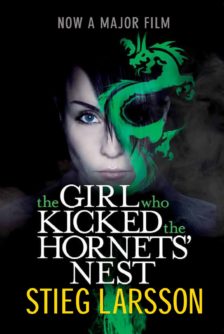
THE GIRL WHO KICKED THE HORNET’S NEST
A slow, less compelling finale for discerning adults.
Should You Watch It?
This third film has a more acceptable content profile than the first two movies in the series. It does not contain their extreme sex, explicit nudity, and violence. It also has a moral theme about finding truth and justice for a woman abused by a corrupt system.
The problem is that the movie is poorly and clumsily executed. Its 148-minute running time feels too long, the pace is often slow, and Lisbeth and her reporter friend barely interact until the end. The conclusion is less enthralling, exciting, and compelling than the earlier films.
The mature material and confused worldview make this a poor family choice. If you are an adult finishing the series, wait to watch it at home, where you can control the experience.
The Story
NO SPOILERS — WE KEEP THE SURPRISESLisbeth Salander, a punk hacker, is wounded after fighting her evil father, a Soviet defector who runs a sex-trafficking gang. As Lisbeth faces criminal charges, the secret spy group that covered up her father's crimes works with a prosecutor and a psychiatrist to have her confined permanently.
Her reporter friend Mikael, along with his lawyer sister and a special government investigative team, tries to expose the conspiracy. Meanwhile, Lisbeth's murderous half-brother remains on the loose.
Is It Any Good?
Two stars means this is a disappointing finale, despite a plot that sounds thrilling on paper. The movie's execution is poor and clumsy, its pace often seems too slow, and the long running time works against it.
The film is also less captivating than the first two entries. The male and female leads do not interact until the end, and that eventual interaction is described as lame and uninvolving. It ends the series with a whimper instead of a bang.
The Worldview
The film presents a strong Romantic, feminist worldview. It also contains moral elements concerning truth, justice, and ending a sex-trafficking ring. Its central moral theme is the search for justice for a woman abused since childhood by a system corrupted by sex offenders and murderers posing as respectable citizens.
The movie's more acceptable content does not make its worldview uncomplicated. Its moral concerns are mixed with a confused understanding of rebellion and identity. Brief shots show Lisbeth in a punk outfit with a pierced earring shaped like a little Devil's head. Dressing in such a punk-rock style often shows the person is in a confused, nonconformist mental state. The desire to dress like this suggests a rebellious attitude that pushes many other people away, when God would have us embrace other people so we can preach the Gospel, including helping others in need.
The film's desire for truth and justice points toward a biblical concern, even though its worldview is not fully biblical. Scripture says, “He has told you, O man, what is good; and what does the LORD require of you but to do justice, and to love kindness, and to walk humbly with your God?” (Micah 6:8).
The Content Guide
The specifics — spoilers included by nature — so you can judge for your own family.
Content Summary
Strong Romantic, feminist worldview, with some moral elements concerning truth, justice and ending a sex trafficking ring; 27 or 28 obscenities (including about two or three “f” words), five strong profanities and one light profanity; strong violence with some blood includes bloody wounds, implied rape with bondage, shots of murdered people, woman nails man’s shoes to the floor with a large nail gun, man breaks policewoman’s neck, man shot in head, man points gun, threatening emails sent, young girl restrained in mental facility, man on fire, and assassination plots; implied rape and mentions of child pornography, pedophilia and sex trafficking, but nothing shown in the English language version; no nudity; alcohol use; smoking; and, corruption, cover up and villains try to put woman in mental asylum forever to discredit her true accusations.
Talk About It
Questions for the drive home, the dinner table, or the youth group.
The film centers on the search for truth in a corrupt system. Why does truth matter even when exposing it is costly?
John 8:32 · Ephesians 4:25The story seeks justice for a woman abused by people who should have protected her. What does Scripture require of those who pursue justice?
Micah 6:8 · Isaiah 1:17The film portrays a system trying to silence accusations by confining the accuser. How should Christians respond when vulnerable people are ignored or discredited?
Proverbs 31:8–9 · Psalm 82:3–4The movie connects rebellion with a nonconformist identity. How can Christians distinguish faithful courage from rebellion that pushes people away?
Romans 12:2 · 1 Peter 3:15–16The Final Word
This finale has a worthwhile concern for truth and justice, and it is less objectionable than the first two films. But its slow pace, weak execution, mature content, and confused worldview make it a poor family choice. WAIT FOR HOME — ADULTS ONLY. For better options, see.