
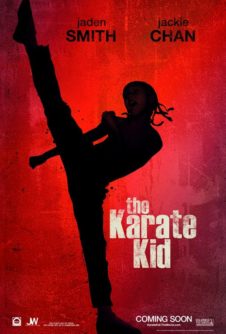
THE KARATE KID (2010)
An entertaining, touching family film with spiritual ideas to discuss.
Should You Watch It?
This is a warm, entertaining family film with real moral substance. Dre learns respect, self-control, kindness, perseverance, and honor from Mr. Han. The story also presents kung fu as a means of establishing peace rather than encouraging bullying or violence. Dre’s friendship with Meiying shows how kindness can cross cultural barriers.
The movie is long at 140 minutes and predictable in places. Its action includes realistic martial arts violence, and one scene depicts drunkenness. More importantly, its spiritual ideas require discernment: Mr. Han teaches Dre about inward energy, or qi, and introduces him to mystical practices.
So, yes—this is worth the trip for families prepared to discuss the film’s Eastern spiritual ideas biblically. Parents should use their judgment with younger children.
The Story
NO SPOILERS — WE KEEP THE SURPRISESDre Parker moves with his mother from Detroit to Beijing, where he struggles with a language barrier, a new school, and relentless bullying. After a kung fu student targets him, Dre turns to Mr. Han, the quiet maintenance man responsible for his apartment’s repairs.
Mr. Han is secretly a kung fu master. Under his unusual instruction, Dre learns that discipline involves more than fighting. As Dre prepares for a tournament, he also forms a friendship with a young violinist and begins learning how to face life’s setbacks.
Is It Any Good?
Three stars means this is a very entertaining and touching film, though not a flawless one. Jaden Smith and Jackie Chan give terrific performances, blending humor and sincerity. The movie makes good use of China’s beauty and culture, including the Great Wall, Tiananmen Square, and the Forbidden City.
The tournament delivers action and suspense, while the training scenes develop Dre’s growth and his bond with Mr. Han. A beautifully staged mock fight between teacher and student is one of the film’s most tender moments. Still, the 140-minute running time makes the movie feel leisurely, and some developments are predictable.
The Worldview
The film strongly affirms respect, wisdom, kindness, self-control, friendship, and honor. Dre’s training teaches him perseverance, while the story repeatedly presents peace as better than bullying or violence. It also includes forgiveness and reconciliation, especially in the relationship between Dre and Mr. Han.
The concern is the film’s presentation of Eastern spiritual mysticism. Qi is described as an inward energy that gives power from within, and the story includes the Yin Yang, a mystical fountain, and a woman who controls a snake by being still. Dre’s curiosity about manipulation is rebuked, and he is told that he needs only to control himself, but the surrounding spiritual ideas remain misleading from a biblical perspective.
Christian teaching points instead to the Creator, not mystical power within the self. “Be still, and know that I am God” (Psalm 46:10) directs us toward knowing God, not harnessing an impersonal force.
The Content Guide
The specifics — spoilers included by nature — so you can judge for your own family.
Content Summary
Strong mixed pagan worldview with some solid moral elements and light redemptive elements in story about a young American boy who learns kung fu in order to defend himself against bullies at his new school in China includes strong moral themes of respect, friendship despite cultural barriers, and self-control, a couple redemptive scenes of forgiveness and reconciliation, false Eastern mysticism emphasizing the importance of one’s qi, or energy flow, as an inner force that “gives power from within” with images of the Yin Yang, a central emblem of ancient Chinese astrology and mysticism, main character is told to drink of a Yin Yang fountain called the “Dragon Well” so that “nothing can defeat [him],” a woman is able to “control” a snake by “being still,” piquing the main character’s curiosity about manipulation but he is rebuked and told he needs only to control himself; four obscenities using a** but boy is rebuked for using the term by an elder mentor and one light exclamatory profanity; moderate action violence includes realistic martial arts action (including during martial arts tournament), two particular scenes show main character being beaten up by a relentless bully, but no blood is shown; no sex; some upper male nudity during training; implied alcohol use in one scene with depicted drunkenness; no smoking or drugs; and, bullying and boy is upset at his mother for moving them to China, where he has trouble fitting in with other boys.
Talk About It
Questions for the drive home, the dinner table, or the youth group.
Dre learns that strength includes self-control. When are you most tempted to use strength or anger wrongly?
Proverbs 16:32 · James 1:19–20Mr. Han teaches Dre to persevere after failure and pain. What helps you get back up when life knocks you down?
Proverbs 24:16 · Galatians 6:9Dre and Meiying show kindness across cultural barriers. How can friendship demonstrate love for people who seem different from us?
John 13:34–35 · Romans 12:10The film presents qi as an inward source of power. How is that different from the Christian belief that our help and strength come from God?
Psalm 121:1–2 · 2 Corinthians 12:9The Final Word
THE KARATE KID is entertaining, touching, and rich in lessons about respect, kindness, self-control, and perseverance. Its mystical spiritual ideas require biblical discernment, but prepared families can find much to discuss and enjoy. WORTH THE TRIP.









