
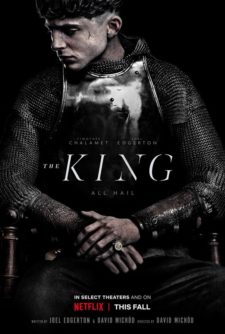
THE KING (2019)
A revisionist, soulless Henry V best left for discerning adults.
Should You Watch It?
THE KING has some merit. It offers Christian scenes, prayers, chapel scenes, and moments suggesting the values of friendship and reverence for monarchy. It is also entertaining in places, and its sex and violence are muted compared with many current historical programs.
But the film’s heart is a serious problem. It treats history as a revisionist, antiwar argument rather than engaging the reasons people believed they had to resist tyranny. Its clergy are portrayed as greedy, corrupt, and foolish, while its humanist outlook leaves little room for a living God or genuine moral purpose.
The R rating and −2 Family Content rating make this a film for discerning adults only. If you are curious, watch it at home, where you can control the experience—but families and young teens should choose something else.
The Story
NO SPOILERS — WE KEEP THE SURPRISESHal, the future Henry V, lives a hedonistic life with his friend and confidant, Falstaff. When Hal’s dying father chooses another son as heir, Hal is drawn back into the affairs of the English crown.
After his brother dies, Hal becomes king and promises to bring peace rather than war. Yet political pressure, a supposed assassination attempt, and advice from those around him push the young monarch toward a conflict with France.
Is It Any Good?
Three stars means THE KING is intermittently entertaining but falls well short of the greatest screen versions of HENRY V. The film is tedious in a few places, and the battle scenes can become absurd, with combatants flailing against armor. The lead performance also weakens the film: Henry’s fighting looks unconvincing, and his speeches sound more like yelling than commanding rhetoric.
The movie’s muted sex and violence keep it from becoming as extreme as many current historical programs. Still, the disappointing treatment of Henry, Falstaff, the battle of Agincourt, and the story’s emotional moments keeps this revisionist drama from rising to the level of Kenneth Branagh’s HENRY V or Laurence Olivier’s 1953 film.
The Worldview
THE KING presents a very subtle, muted antiwar and humanist worldview. It revises Shakespeare’s HENRY V by portraying English nobles as twisting and inventing facts to deceive Henry into war with France. The film’s central argument is that war is unnecessary because political leaders are driven by property and wealth. Yet it does not adequately consider the valid reasons for standing against tyranny or the Christian Just War tradition associated with St. Augustine.
The film includes prayers, chapel scenes, and mentions of God. It also hints at friendship and reverence for monarchy. However, there is no apparent connection between Henry’s prayers and the living God. The clergy are portrayed as more greedy, corrupt, and foolish than the noblemen who deceive Henry. Falstaff serves as the voice of humanism, while Henry is easily deceived and eventually becomes a rabid killer.
The film’s historical revisions also matter. It depicts a medieval world in which rulers held territories and alliances rather than modern nation-states, but its political message reduces the period’s conflicts to greed and deception. The result is a heartless, soulless interpretation of Christian history.
Scripture recognizes that rulers and nations can be unjust, but it also calls people to pursue justice and truth: “Learn to do good; seek justice, correct oppression” (Isaiah 1:17).
The Content Guide
The specifics — spoilers included by nature — so you can judge for your own family.
Dominant Worldview and Other Worldview Content/Elements
Very subtle, muted antiwar, humanist worldview with revisionist history changing Shakespeare’s greatest history, HENRY V, with the English nobles twisting and inventing facts to con Henry V into going to war against France, also several prayers, several chapel scenes, and several mentions of God, but the clergy is portrayed as even more greedy and corrupt than the noblemen and also portrayed as inarticulate bumbling fools
Foul Language
Five or six obscenities (including three anachronistic “f” words)
Violence
Violence throughout the movie but not as gruesome as many current movies, although the violence is severe such as when Henry has two men beheaded, the French kill two boys and force the third boy to carry one boy’s bloody head back to frighten Henry, some assassination and lots of war violence, some man on man combat to the death, and some big battle scenes (with the man on man violence often being absurd because people are flailing against some knights’ armor with their bare hands to defeat the knights), and one scene has Henry applying a hot poker to seal Falstaff’s wound
Sex
Many sexual jokes, young Henry is shown several times a bed with some girl or another, and one time having fornication but the girl is clothed
Nudity
Upper female nudity in a see-through bodice and upper male nudity several times
Alcohol Use
Lots of alcohol and severe drunkenness
Smoking and/or Drug Use and Abuse
No smoking or drugs;
Miscellaneous Immorality
Every nobleman is deceptive, Falstaff is the voice of humanism, Henry is a wimp and easily deceived, Henry becomes a rabid killer, dishonesty, cheating, Falstaff doesn’t want to pay his bills, Falstaff is a thief, but he says he only steals from people who deserve it.
Talk About It
Questions for the drive home, the dinner table, or the youth group.
The film presents war as the result of deception and greed. How should Christians think about justice, oppression, and the use of power?
Isaiah 1:17 · Romans 13:1–4Henry promises to be a king who brings peace, but his choices lead to violence. What is the difference between merely wanting peace and pursuing biblical peace?
Matthew 5:9 · James 3:17–18Falstaff speaks as a humanist and rejects war. What can human wisdom see clearly, and where does it need God’s truth?
Proverbs 3:5–7 · 1 Corinthians 1:20–25The film includes prayers but shows little connection with the living God. What does genuine prayer involve beyond saying religious words?
Matthew 6:5–13 · Psalm 51:17The Final Word
THE KING is entertaining in places and includes hints of friendship, reverence, and Christian belief. But its R-rated content and −2 Family Content rating, combined with its soulless humanist revision of history, make it better left at home for discerning adults. Our answer is WAIT FOR HOME — ADULTS ONLY. For a family-friendly alternative, see.









