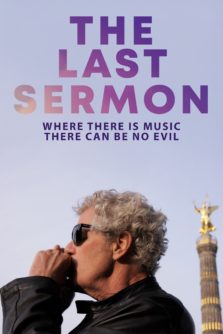
THE LAST SERMON
A compassionate documentary that ultimately confuses the faiths it examines.
Should You Watch It?
THE LAST SERMON offers honest interviews and an inside look at the Middle East and the Muslim refugee crisis. Its two filmmakers approach refugees, religious leaders, and other subjects with compassion. The film also promotes peace and biblical care for refugees.
But its execution is flawed. The documentary ultimately lacks substance, and it fails to make much of the filmmaker’s Christian faith. Most seriously, it equates the God of the Quran with the God of the Bible, a theological error that undercuts the film’s stated search for truth.
This is worthwhile viewing only for discerning adults who can engage its serious subject matter and reject its confused theology. Families with children or young teens should choose something else.
The Story
NO SPOILERS — WE KEEP THE SURPRISESAfter surviving a 2003 suicide bombing at a music bar in Tel Aviv, Israel, filmmakers Jack Baxter and Joshua Faudem travel across Europe and the Middle East fourteen years later. They visit refugee camps, mosques, relief organizations, and communities affected by terrorism.
Their journey seeks to understand Islamic extremism, the Muslim refugee crisis, and the roots of violence. Along the way, interviews, music, faith, and a new tragedy reshape their investigation.
Is It Any Good?
Three stars means this documentary has real strengths but ultimately falls short. Its interviews are often honest and human, and the filmmakers approach people with compassion and understanding. Hearing from refugees and religious leaders is genuinely interesting, while the film offers an informative look at places and experiences many people do not see.
The weakness is substance. The documentary fails to capitalize significantly on Baxter’s Christian faith and does not communicate much of value by the end. Its important topic deserved more focused and meaningful execution.
The Worldview
THE LAST SERMON tries to understand Islamic terrorism and the Muslim refugee crisis through interviews, travel, and personal investigation. It promotes peace and biblical care for refugees, includes references to one filmmaker’s conversion to Christianity, and shares some truths through street evangelism. These elements align with a biblical concern for people suffering and displaced by violence.
The film’s central theological error is serious: it eventually equates the God of the Quran with the God of the Bible. Its worldview is also described as strongly mixed and pagan. Although the documentary raises important questions about terrorism, faith, hope, and mercy, the filmmaker’s Christian faith ultimately does not play much of a role in the movie.
The film’s care for refugees reflects Scripture’s command to welcome the vulnerable: “I was a stranger and you welcomed me” (Matthew 25:35). But biblical compassion must remain joined to biblical truth, including the truth about who God is.
The Content Guide
The specifics — spoilers included by nature — so you can judge for your own family.
Dominant Worldview and Other Worldview Content/Elements
Strong mixed pagan worldview in documentary trying to understand Islamic terrorism and the Muslim refugee crisis in Israel and the Middle, with some strong false theology such as filmmakers eventually equate the God of the Quran with the God of the Bible, combined with some moral elements such as promoting peace and biblical care for refugees and some references to one filmmaker’s conversion to Christianity and some truths are shared through street evangelism, but the one filmmaker’s religious faith ultimately doesn’t play much of a role in the movie otherwise
Foul Language
No obscenities and one muffled use of a strong GD profanity
Violence
The documentary is centered around terrorism, many mentions of suicide bombings and terrorist attacks, with some archival footage of the aftermath of a terrorist attack
Sex
No sex
Nudity
No nudity Alcohol Use/Abuse: No alcohol
Smoking and/or Drug Use and Abuse
Men are seen smoking throughout, but no drug content or references;
Miscellaneous Immorality
Nothing else objectionable.
Talk About It
Questions for the drive home, the dinner table, or the youth group.
The filmmakers meet refugees and promote care for displaced people. What does biblical hospitality require from us?
Leviticus 19:33–34 · Matthew 25:35How can compassion for people affected by terrorism remain joined to truth about God?
Ephesians 4:15 · John 14:6The film explores the relationship between violence, faith, and justice. What does Scripture say about responding to evil?
Romans 12:19–21 · Micah 6:8How should Christians respond when a documentary raises important questions but offers confused answers?
Acts 17:11 · 1 Thessalonians 5:21The Final Word
THE LAST SERMON takes a compassionate look at refugees, terrorism, and the search for peace. Its honest interviews are worthwhile, but its shallow execution and false theology require discernment. For discerning adults, the answer is WORTH THE TRIP — ADULTS ONLY. For other options, see.