
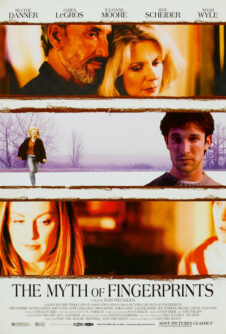
THE MYTH OF FINGERPRINTS
An arty, anguished family drama best left unseen.
Should You Watch It?
The film has a beautiful northern New England setting, moments of brilliant dialogue, and some superb acting. Bart Freundlich’s direction shows real talent. But the movie’s artistry is too self-absorbed to redeem its bleak portrait of a family fractured by lust, anger, denial, insanity, and resentment.
The content is also severe. The film includes 23 obscenities and 23 profanities, clothed fornication, alcohol abuse, chain smoking, marijuana use, emotionally violent confrontations, and a worldview marked by paganism and anti-Christian attitudes.
The source review finds little reason to invest in these characters. For discerning adults, this is not a family choice or a nourishing drama. Skip it.
The Story
NO SPOILERS — WE KEEP THE SURPRISESWarren returns to his northern New England home for Thanksgiving, joining a family already strained by old wounds. His father is troubled, his sisters carry anger and responsibility in different ways, his brother is driven by lust, and Warren’s former love remains part of the family’s painful history. As everyone gathers, the reunion exposes the dysfunction beneath the picturesque setting.
Is It Any Good?
Two stars means the film shows real ability but fails to become a satisfying whole. Its beautiful bucolic setting, moments of brilliant dialogue, and some superb acting reveal genuine promise. The director clearly has talent.
But the direction is too self-absorbed and arty, and the family drama feels dysfunctional in itself. The film becomes an exercise in pathos rather than a compelling account of people the audience can care about.
The Worldview
The film presents a family with no meaningful understanding of God’s love and grace. Its characters are marked by lust, anger, deceit, denial, self-pity, and emotional damage. The source review sees them as corrupted by modernity and as reflecting the consequences of a broader cultural war against values.
There are some Christian references, but the worldview is pagan and includes anti-Christian attitudes. The film does not offer truth or grace as an answer to the family’s brokenness. Instead, it leaves its characters trapped in dysfunction and pathos.
The film’s deepest absence is the absence of grace where grace is desperately needed. Scripture describes life apart from God as being “having no hope and without God in the world” (Ephesians 2:12).
The Content Guide
The specifics — spoilers included by nature — so you can judge for your own family.
Content Summary
Pagan worldview with some Christian references as well as anti-Christian attitudes; 23 obscenities & 23 profanities; 2 emotionally violent encounters − one where man confronts girl & the other where son confronts father; no nudity; several scenes of clothed fornication; alcohol abuse; chain smoking & marijuana use; and, lying & deceit
Talk About It
Questions for the drive home, the dinner table, or the youth group.
The film portrays a family with no apparent understanding of God’s love and grace. What difference would grace make in a family marked by old wounds?
Ephesians 4:31–32 · Colossians 3:12–13The family’s conflicts include lust, anger, denial, and self-pity. How does Scripture call us to confront destructive desires honestly?
James 1:14–15 · Galatians 5:16–24The source review describes the film as reflecting a cultural war against values. Which values does Scripture say should shape a household?
Deuteronomy 6:6–7 · Ephesians 5:25–33The film includes lying and deceit. Why does truth matter even when honesty exposes painful family problems?
Ephesians 4:25 · Proverbs 12:22The Final Word
This drama has a beautiful setting, talented actors, and flashes of brilliant dialogue. But its self-absorbed direction, severe content, and bleak worldview leave little reason to recommend it. For your family’s time and conscience, SKIP IT.









