
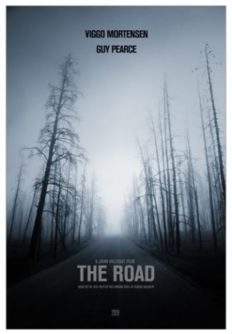
THE ROAD
A deeply moving journey of goodness and hope — for adults only.
Should You Watch It?
You should see The Road if you can handle a bleak, intense drama in exchange for a story with a redemptive heart. Its father-and-son relationship gives the film its strength. Hope, love, goodness, faith in the future, and the desire to remain among the “good guys” keep these characters human when nearly everything around them has collapsed.
The cost is real. The film includes strong foul language, intense violence, blood and body parts connected to cannibalism, and deeply disturbing circumstances. Its four-star quality comes with a −2 Family Content rating, so this is not a family movie despite its positive moral vision.
For discerning adults and older teenagers, The Road is worth the trip; for children and young teens, choose something else.
The Story
NO SPOILERS — WE KEEP THE SURPRISESIn a dying world, a father and his son travel south toward the East Coast, searching for food and safety. They encounter marauders, a starving old man, and other dangers along the way.
The father is slowly dying himself, but he has given his son something stronger than survival skills: hope, love, goodness, and the determination to remain human.
Is It Any Good?
Four stars means The Road is a deeply poignant and inspiring film whose emotional power comes chiefly from its central performances. Viggo Mortensen and Kodi Smit-McPhee are excellent as the father and son, and their relationship propels the movie. Robert Duvall adds a gentle touch as the starving old man.
The film’s biggest misstep is its flashback material involving the wife, played by Charlize Theron. Those scenes are confusing, unconvincing, and less interesting than the father-and-son scenes. Still, the movie overcomes that weakness through its moral focus and quietly powerful, uplifting ending.
The Worldview
The Road presents a light Christian worldview with strong moral elements. The father teaches his son to hold onto hope, love, goodness, and faith in the future. The boy, in turn, sometimes reminds his father not to lose his humanity. Their relationship gives the film a clear conviction that goodness must survive even when the world has become deeply corrupt.
The film includes positive references to God, and the father and son take refuge in a Christian church. It also briefly expresses doubts about God and what He is doing while the earth is dying and people are starving. These Christian elements could have been developed more fully, but they strengthen the movie’s moral heart.
The film contrasts the father and son with desperate or evil people who steal from others and descend into inhuman behavior. The father sometimes sins, but his son pulls him back toward the moral lessons he has been taught. The movie’s hope is ultimately human and relational rather than fully grounded in biblical redemption, yet it points toward the biblical promise that catastrophe will not have the final word.
Scripture promises “a new heaven and a new earth” (Revelation 21:1).
The Content Guide
The specifics — spoilers included by nature — so you can judge for your own family.
Content Summary
Light Christian, redemptive worldview with strong moral elements, including a positive relationship between a father and his son, a couple positive references to God, and protagonists take refuge in a church, but some doubts are briefly expressed about God and what He’s doing because the Earth is suddenly dying and people are starving; 16 obscenities (including some “f” words), five GDs, two light profanities, and man urinates against a tree; strong intense violence includes marauding villain shot in head, bloody references to cannibalism, cannibal group has imprisoned emaciated people in cellar, cannibal group chases father and son, protagonist shot with arrow, and he shoots a flare into window from where arrow came and shortly thereafter viewers see small flaming wound in dying man’s stomach from flare; no sex scenes; rear and upper male nudity in about four three scenes, but not sexual, including man forces a thief to take off his clothes and abandons him to the elements, but later returns the clothes; brief alcohol use; no smoking; and, desperate and/or evil men steal from other people, adult hero sins two or three times but his son (instilled with the father’s moral lessons and the desire to be one of the “good guys”) pulls him back, father says son is like a god to him but he appears to mean that in a figurative way when an elderly man calls the son “an angel,” and confusing moment that does not completely make sense where father says about his son, “If he is not the word of God, then God never spoke.”
Talk About It
Questions for the drive home, the dinner table, or the youth group.
The father teaches his son to remain one of the “good guys.” What helps you keep doing what is right when circumstances make goodness costly?
Romans 12:21 · Galatians 6:9The boy sometimes reminds his father not to lose his humanity. How can we encourage one another when fear or hardship tempts us to act selfishly?
Hebrews 10:24–25 · Philippians 2:3–4The film presents hope and love as reasons to keep going. Where does Christian hope come from, and how does it change the way we face suffering?
Romans 5:3–5 · 1 Peter 1:3–5The story includes doubts about God while people suffer. How can we bring honest questions to God without surrendering our trust in Him?
Psalm 13 · Mark 9:24The Final Word
The Road is a beautifully acted, morally serious drama about preserving goodness in a dying world. Its strong language and disturbing violence make it unsuitable for children and young teens. For discerning adults and older teenagers, it is WORTH THE TRIP — ADULTS ONLY. For a gentler family choice, see.









