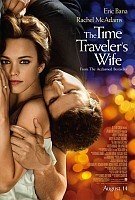
THE TIME TRAVELER’S WIFE
A bittersweet romance with serious content for discerning adults.
Should You Watch It?
THE TIME TRAVELER'S WIFE offers a moving love story about marriage, family, and the pain of being separated by circumstances no one can control. Its bittersweet tone includes sadness, joy, and inspiration, while its moral strengths center on love for a spouse and family.
The movie also asks you to accept a worldview without God, Jesus Christ, or God’s Law. Its relationships must carry the weight of meaning on their own, even as the story shows how vulnerable relationships can be. Politically correct material targeting Republicans and hunters, along with a line supporting a radical homosexual agenda, adds to the concern.
Adults who can weigh those issues may find worthwhile moral elements here. For family viewing, however, choose something else; this is not for children or young teens.
The Story
NO SPOILERS — WE KEEP THE SURPRISESHenry has a genetic anomaly that makes him travel through time without warning. His journeys repeatedly bring him to Clare, a redheaded girl who grows up knowing him before he knows her.
Eventually, the two fall in love and marry. But Henry’s condition keeps separating them, creates practical dangers, and threatens their hopes for a family. Their relationship must endure the consequences of a gift that first brought them together.
Is It Any Good?
Three stars means a well-done film that falls short of greatness. The movie is sometimes sad, but also joyful and inspiring. Eric Bana and Rachel McAdams give good performances.
The romance does not quite reach the level of great romantic movies such as Sleepless in Seattle or Enchanted. The chemistry between the leads seems insufficiently strong, making the film good rather than truly memorable.
The Worldview
The movie presents a light humanist worldview. It offers no overt or implied positive references to God, Jesus Christ, or God’s Law. Instead, Henry and Clare must rely on their own personal relationships for meaning and stability, even though the story shows those relationships being threatened by circumstances.
The film has some strong positive moral elements, especially its respect for love between spouses and its concern for family. However, its political material attacks Henry’s father-in-law for being a Republican and a hunter, and that characterization affects the ending. A line supporting the radical homosexual agenda also contributes to the film’s politically correct perspective. These elements are not constant or extremely didactic, but they are gratuitous and distracting.
The film’s longing is for love that can survive separation and time. Scripture points beyond human relationships to the source of love itself: “We love because he first loved us” (1 John 4:19).
The Content Guide
The specifics — spoilers included by nature — so you can judge for your own family.
Content Summary
Light humanist worldview with some overt and implied, strong overall politically correct content that consists of a line delivery mocking man’s Republican father-in-law who’s also a hunter, man hits a stranger while calling him a “homophobe” after some unseen altercation and an ironic situation at the end once again attacks the hunting Republican father-in-law, plus some strong moral elements regarding love of spouse and family, some references to Christmas, and the aforementioned politically correct defense of homosexuality; 14 obscenities, four strong profanities and six light profanities; light violence with some blood includes man accidentally shot, man runs from pursuers and man hits another man; light sexual content includes implied premarital sex, passionate kissing with woman on man’s lap, camera cuts away after unmarried couple starts taking off clothes, and implied marital sex; brief rear female nudity and upper and rear male nudity, but not in sexual contexts; alcohol use; no smoking or drugs; and, stealing clothes, breaking and entering, and man teaches daughter how to pick a lock.
Talk About It
Questions for the drive home, the dinner table, or the youth group.
Henry and Clare’s marriage is repeatedly tested by circumstances outside their control. What helps a marriage remain faithful when life becomes painful and uncertain?
Ephesians 5:25 · 1 Corinthians 13:7The film places great weight on human relationships but leaves God, Jesus Christ, and God’s Law out of its worldview. Where should a Christian look for a love that will not fail?
1 John 4:9–10 · Romans 8:38–39The story connects love of spouse with love of family. How can your family show faithful love in ordinary, difficult moments?
Colossians 3:12–14 · Galatians 6:2The film includes judgments about political identity and hunting. How should Christians speak about people with whom they disagree?
James 1:19–20 · Ephesians 4:29The Final Word
This is a well-done, bittersweet romance with meaningful love-of-family themes, but its worldview and mature content require discernment. For discerning adults who can weigh those concerns, it is WORTH THE TRIP — ADULTS ONLY. For everyone else, begin with.