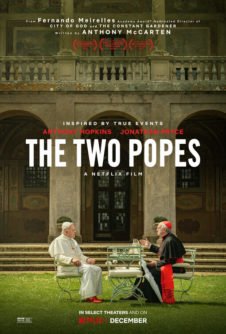
THE TWO POPES
Beautifully acted, spiritually confused, and meant for discerning adults.
Should You Watch It?
You will find real strengths here. The Two Popes gives Anthony Hopkins and Jonathan Pryce substantial roles as Pope Benedict and Cardinal Bergoglio, whose conversations explore failure, forgiveness, humility, repentance, and the burdens of leadership. The film also contains touching moments that make both men seem relatable and inspiring.
But the movie’s positive Christian elements are overcome by its theological confusion. It clearly sides with Bergoglio and his reform-minded, anti-capitalist ideals, while suggesting that the Catholic Church should change biblical positions concerning abortion and sexual immorality. Its Marxist and communist ideas are not treated with enough clarity or criticism.
The film also includes disturbing violence, sexual references, and other mature content. Adults who can discuss its ideas critically may find value here; families with children or young teens should choose something else. The practical answer: WORTH THE TRIP — ADULTS ONLY.
The Story
NO SPOILERS — WE KEEP THE SURPRISESAfter Pope John Paul II dies, the Catholic Church gathers to elect a new pope. Cardinal Ratzinger becomes Pope Benedict XVI after a close contest with Cardinal Bergoglio of Argentina.
Seven years later, Bergoglio travels to meet the increasingly frail Benedict. Bergoglio expects the pope to consider his request to retire, but Benedict has another reason for calling him there. Their meetings become a personal and theological conversation about tradition, reform, leadership, failure, and forgiveness.
Is It Any Good?
Three stars means this is a well-made drama with meaningful strengths but significant weaknesses. The movie is beautifully produced and acted. Hopkins and Pryce fully embrace their roles, becoming almost indistinguishable from the men they portray. The cinematography makes innovative use of grand overhead shots, color, and black and white.
The touching conversations between Benedict and Bergoglio are the film’s strongest material. Their struggles with past failures give the drama emotional weight.
Still, the theological differences between the two men are too vague. The film’s position on reform, abortion, sexual immorality, Marxism, and capitalism feels shallow and superficial. A different voice actor portraying Francis speaking Portuguese is also somewhat off-putting.
The Worldview
The film presents the transition from the conservative Pope Benedict XVI to the more liberal Pope Francis as a conflict between tradition and reform. It sympathizes more with Bergoglio’s call to move with the times, but it leaves the meaning of that reform unclear. Early dialogue suggests support for changing the Church’s positions on abortion, sexual immorality, the ordination of women, and married priests. The movie does not return clearly to those issues, creating ambiguity about what its reform actually means.
Its treatment of poverty and oppression sounds like Marxist, communist, and socialist redistribution of wealth. The film also presents anti-capitalist ideas without seriously examining their problems. It depicts Bergoglio as an agent of change while treating rituals connected to church authority as shallow obstacles. The movie’s positive Christian elements include references to Jesus, the Virgin Mary, and Scripture, along with friendship, repentance, forgiveness, and humility. Yet these themes are overshadowed by false, leftist theology and the suggestion that the Church should change biblical positions.
The film also presents both men struggling to forgive themselves for past failures. That longing for mercy connects with Scripture: “as the Lord has forgiven you, so you also must forgive” (Colossians 3:13).
The Content Guide
The specifics — spoilers included by nature — so you can judge for your own family.
Dominant Worldview and Other Worldview Content/Elements
Strong false theology about the transition from Pope Benedict to Pope Francis in the Catholic Church in 2013 promotes Marxist communism and anti-capitalism, and indicates the filmmakers are opposed to the Church’s opposition to abortion, mixed with strong, sometimes touching Christian content that includes references to Jesus, the Virgin Mary and Scripture, and themes of friendship, repentance, forgiveness, and humility, plus a reference to same-sex marriage
Foul Language
Two obscenities
Violence
At least two scenes of disturbing violence such as a military man horrifically shoves a woman out of a high-flying airplane and into the ocean, and two gunmen assassinate a priest on the street, soldiers come and drag two priests away, it is said that dead bodies of people murdered by a military government in Argentina float back onto the shore
Sex
A verbal reference to self-abuse in a series of Catholic confessions played over the movie soundtrack and some references to the sex abuse scandals in that denomination
Nudity
Upper male nudity of an elderly person in one scene
Alcohol Use
Characters have wine over dinner, plus there’s a scene in a bar
Smoking and/or Drug Use and Abuse
Some smoking and it is said that members of a tyrannical military junta drugged some people opposing them to throw them out of helicopters and airplanes into the ocean;
Miscellaneous Immorality
Spiritual pride, but it’s later confronted and rebuked, stubbornness, and Catholic Cardinal expresses opposition to his leader’s papacy, and Pope questions the Cardinal’s motives.
Talk About It
Questions for the drive home, the dinner table, or the youth group.
The film shows two leaders confronting past failures. What does Scripture teach about receiving God’s forgiveness instead of remaining trapped in shame?
Psalm 103:10–12 · 1 John 1:9Benedict and Bergoglio disagree about tradition, compromise, and change. How can Christians test a proposed reform against God’s Word?
Acts 17:11 · 2 Timothy 3:16–17The movie connects care for the poor with political and economic ideas. What does Scripture require of us toward people in need, and how should Christians pursue that care wisely?
Proverbs 19:17 · James 2:14–17The film raises questions about forgiveness and mercy. How is Christian forgiveness different from simply excusing wrongdoing?
Colossians 3:13 · Ephesians 4:32The Final Word
The Two Popes is beautifully acted and offers touching reflections on repentance, forgiveness, and humility. But its Marxist and anti-capitalist theology, ambiguity about biblical moral positions, and disturbing content make it unsuitable for children and young teens. For discerning adults, it is WORTH THE TRIP — ADULTS ONLY. For a family alternative, see.