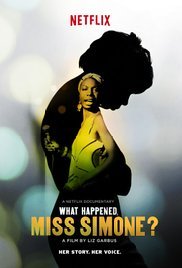
WHAT HAPPENED, MISS SIMONE?
A powerful portrait of a gifted life marked by darkness.
Should You Watch It?
WHAT HAPPENED, MISS SIMONE? is a strong, in-depth portrait of Nina Simone’s extraordinary talent and deeply troubled life. Pre-recorded interviews with Simone and people who knew her help the documentary trace her journey from gifted church pianist to celebrated singer, civil rights activist, and wandering artist.
The film does not hide the darkness. It includes accounts of severe domestic abuse, Simone’s violent behavior, graphic civil rights-era violence, foul language, and other mature content. Its treatment of faith is also troubling, presenting a woman raised in a Christian family while showing anti-Christian elements and a life shaped by destructive choices.
The documentary is worth seeing for discerning adults who can withstand its content and want a serious, beautifully made portrait. It is not appropriate for children or young teens.
The Story
NO SPOILERS — WE KEEP THE SURPRISESBorn Eunice Waymon, Nina Simone grows up in a Methodist family and displays remarkable piano talent from an early age. She dreams of becoming a classical concert pianist, but financial obstacles lead her toward playing in bars and developing a new musical identity.
Her career rises quickly, bringing marriage, motherhood, fame, civil rights activism, and severe personal struggles. Through interviews, memories, music, and archival material, the documentary asks what happened to Nina Simone.
Is It Any Good?
Three stars means a strong, powerful documentary with notable flaws. WHAT HAPPENED, MISS SIMONE? is beautifully made and uses pre-recorded interviews with Simone, her daughter, her ex-husband, relatives, and friends. It captures her full life from beginning to end.
The documentary’s overarching question is answered wholesomely throughout, and the film portrays Simone as accurately as possible in each chapter of her life. Its effectiveness is weighed down by the heavy content and disturbing material, but its construction and breadth give viewers a substantial portrait rather than a shallow biography.
The Worldview
The documentary presents a strong pagan worldview about a woman pursuing fame, fortune, and acceptance in the wrong places. It includes light moral elements showing the consequences of such actions and some discussion of Simone’s Christian family background. However, the film also contains anti-Christian elements when she “finds God” but continues to beat her child.
The film portrays fame and worldly pleasure as unable to heal Simone’s inner darkness. Her abuse, violent thinking, mood swings, broken family life, and pursuit of fulfillment are shown as part of a tragic and destructive journey. The source review sees the documentary as depicting a life without the light of Jesus leading her toward a good, solid, and blessed career.
The civil rights material includes racism, riots, violent activism, and opposition to government actions. The documentary contrasts Simone’s violent means with Martin Luther King Jr.’s peaceful civil rights efforts, while also portraying her as a major figure in the movement.
The film’s central longing is for acceptance and freedom, but it does not offer the Christian light the source review finds missing from Simone’s life. Jesus says, “I am the light of the world” (John 8:12).
The Content Guide
The specifics — spoilers included by nature — so you can judge for your own family.
Content Summary
Strong pagan worldview about a woman’s pursuit of fame, fortune and acceptance in all the wrong places, with some politically correct civil rights activism, with light moral elements showing the consequences of such actions, plus light discussion of woman’s Christian family background, but with anti-Christian elements when woman “finds God” but still beats her child; 12 profanities (all being GDs) and six obscenities; very strong, extreme and graphic violence including Nina talking about her husband abusing and beating her, tying her up, holding a gun to her head, hitting her head against a concrete wall, punching her in the stomach while she was pregnant, slapping her in the face, as well as Nina beating her daughter, two references to suicide, pictures and video clips of a man being burned alive, large riots of people stealing and burning buildings, a man being hung by the neck, police beat man with a stick, police shown strangling man and dragging him through the streets, police throwing bombs at a group of people, and a picture of a man shot through the head; light sexual content with implied adultery and mention of woman becoming addicted to sex; naturalistic nudity among African people; light and brief alcohol use; light smoking of cigars and cigarettes and moderate use of prescribed medication for sleep, depression and bi-polar disorder; and, strong miscellaneous immorality and behavior such as lying, stealing, gambling, many types of references to racism, bad role models, dysfunctional family portrayals, divorce, running away, and mental disorders.
Talk About It
Questions for the drive home, the dinner table, or the youth group.
The documentary shows how fame, fortune, and acceptance failed to satisfy Nina Simone’s deepest longings. What are you tempted to use for fulfillment instead of God?
Matthew 6:19–21 · John 6:35The film portrays severe abuse and destructive violence. How should Christians respond to abuse, and where can victims seek refuge?
Psalm 34:18 · Psalm 82:3–4Simone was raised in a Christian family, but the documentary presents troubling contradictions between faith and behavior. Why must genuine faith shape the way we treat others?
James 1:22 · 1 John 3:18The film contrasts violent civil rights activism with Martin Luther King Jr.’s peaceful approach. How does Scripture call believers to respond to injustice and enemies?
Micah 6:8 · Romans 12:17–21The Final Word
WHAT HAPPENED, MISS SIMONE? is a beautifully made and powerful documentary about an extraordinary performer whose gifts were accompanied by profound darkness and destructive choices. Its graphic violence and heavy mature content make it unsuitable for children and young teens. For discerning adults, the answer is WORTH THE TRIP — ADULTS ONLY. For a family-friendly alternative, see.