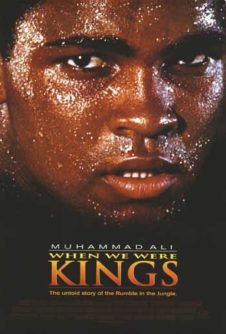
WHEN WE WERE KINGS
A vivid boxing documentary with adult content and a complicated hero.
Should You Watch It?
WHEN WE WERE KINGS brings the 1974 “Rumble in the Jungle” between Muhammad Ali and George Foreman to life through actual footage, interviews, and Ali’s unmistakable comic energy. It works as both a remembrance for those who saw Ali in his prime and an introduction for younger adults who did not.
The film’s adult content is not incidental. It includes boxing violence, strong language, brief upper female nudity, blasphemy, alcohol, smoking, and worldview concerns surrounding Ali’s claims about God and his mention of Allah.
If you are a discerning adult interested in boxing, history, or a charismatic cultural figure, this documentary has real value despite some slow musical passages. For children and young teens, choose something else.
The Story
NO SPOILERS — WE KEEP THE SURPRISESThis documentary revisits the famous 1974 boxing match in Africa between Muhammad Ali and George Foreman. Actual fight footage is combined with interviews with filmmakers, writers, and other people connected to the event.
Ali’s personality provides the film’s comedic center as the documentary traces the public excitement surrounding the contest and the larger musical and cultural events around it.
Is It Any Good?
Three stars means a compelling documentary with noticeable weaknesses. WHEN WE WERE KINGS has a strong linear narrative and effective use of actual footage. Interviews with Spike Lee, Norman Mailer, George Plimpton, and other participants add perspective, while Ali’s antics keep the film lively.
The documentary slows when it explores some of the musical events surrounding the fight. Even so, it serves as a useful reminder of Ali’s public presence and as a good primer for younger viewers who never knew the fighter in his prime.
The Worldview
The film presents Muhammad Ali as a heroic but deeply egotistical fighter who claims to do God’s work. Its worldview is complicated by Ali’s blasphemous statement about being God’s son and by mention of the Islamic god, Allah.
The documentary celebrates Ali’s charisma, confidence, physical ability, and cultural importance. But the source review objects to the way physical performance is connected to divine purposes. Christian faith does affirm that people can do all things through Christ who strengthens them, yet human achievement is not the center of God’s concern. God is more interested in salvation than athletic performance.
The film’s central question about greatness points beyond fame and victory. Jesus asks, “For what does it profit a man to gain the whole world and forfeit his soul?” (Mark 8:36).
The Content Guide
The specifics — spoilers included by nature — so you can judge for your own family.
Content Summary
Islamic worldview of heroic, but egomaniac fighter who claims to do God's work and blasphemes the one True God; 5 obscenities, 1 profanity & several uses of the word "nigger"; action boxing violence; brief upper male & female nudity; alcohol use; and, smoking
Talk About It
Questions for the drive home, the dinner table, or the youth group.
The film presents Ali as both a gifted fighter and an egomaniac. How should Christians think about talent, confidence, and humility?
Philippians 2:3–4 · 1 Peter 5:5–6Ali connects athletic performance with doing God’s work. What does Scripture say about the difference between human achievement and the salvation God gives?
Ephesians 2:8–9 · Mark 8:36The film includes blasphemous words about God. Why does Scripture treat our speech as morally serious?
Matthew 12:36–37 · Ephesians 4:29Fame can preserve a person’s image long after an event is over. What kind of legacy should a Christian seek?
Proverbs 22:1 · Matthew 6:19–21The Final Word
WHEN WE WERE KINGS is a lively, historically valuable documentary with strong footage and an unforgettable central figure. Its adult content and worldview concerns make it unsuitable for children and young teens. For discerning adults, it is WORTH THE TRIP — ADULTS ONLY. For a family alternative, see.