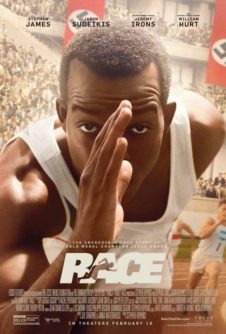
RACE
Jesse Owens rises above racism in an inspiring Olympic drama.
Should You Watch It?
RACE is a compelling sports drama about Jesse Owens, the great Black track star who competed at the 1936 Olympics in Berlin. The film celebrates hard work, duty, friendship, family, honor, marriage, social harmony and sportsmanship. It also attacks racism while showing Americans opposing racial discrimination and segregation.
The movie’s moral center is strong, but the language is excessive enough to require discernment. Its treatment of Hitler’s alleged personal snub of Owens is also historically wrong, even though the film raises serious questions about racism in both Nazi Germany and America.
If your family includes older children who can handle the content, RACE offers an inspiring story and strong performances. For younger children, choose something else. WORTH THE TRIP — AGES 13 AND UP.
The Story
NO SPOILERS — WE KEEP THE SURPRISESIn 1933, Jesse Owens leaves Cleveland for Ohio State University, where his extraordinary speed quickly brings fame. He hopes athletic success will help him support his young daughter and eventually win Olympic gold.
As the 1936 Berlin Olympics approach, Jesse faces pressure to boycott the games because of Hitler’s racist policies. He must weigh America’s own record of segregation against the opportunity to challenge Nazi claims of racial superiority on the world stage.
Is It Any Good?
Three stars means RACE is a good, compelling film with real weaknesses. Stephan James gives a very good performance as Jesse Owens, and the rest of the cast is strong as well. The sets are sometimes amazing, and the friendships between Jesse, his coach Larry Snyder, and German athlete Luz Long give the movie warmth and emotional power.
The film is inspiring and entertaining, but its historical mistake about Hitler snubbing Owens weakens its accuracy. Some viewers may also prefer 42, the film about Jackie Robinson. Overall, RACE is well-made and morally serious, though its language keeps it from being an easy family recommendation.
The Worldview
RACE presents a strong moral worldview that celebrates liberty, equality, hard work, integrity, duty, friendship, family, marriage, honor and sportsmanship. It strongly criticizes racism, discrimination and segregation, while showing both Black and white Americans opposing those evils. The friendship between Jesse Owens and Luz Long, along with Jesse’s relationship with his white coach, shows mutual respect rising above skin color.
The film also presents the moral conflict surrounding the Berlin Olympics. Hitler wants the games to promote Nazi claims of racial superiority, while Americans debate whether participating would legitimize his policies. The movie accurately portrays Nazi propaganda minister Josef Goebbels and presents racial superiority as evil.
However, the film distorts history by repeating the claim that Hitler personally snubbed Jesse Owens. Owens himself denied that this happened. The film also suggests that Owens’ victories refuted Hitler’s claim about a German “master race,” though Nazi Germany won the most medals at the games. The movie’s central moral convictions are sound, but its historical revisionism should be recognized.
The film points toward the truth that human worth cannot be measured by race, strength or achievement. Scripture says, “For all have sinned and fall short of the glory of God” (Romans 3:23).
The Content Guide
The specifics — spoilers included by nature — so you can judge for your own family.
Content Summary
Very strong moral worldview with at least one positive mention of God, strong Pro-American content and values that very strongly criticize harsh big government policies denying liberty and validating hard work and integrity, though the issue of racism, discrimination and segregation is part of the story, and it is asked whether or not Americans who want to boycott Hitler’s Berlin Olympics in 1936 because of his Anti-Semitism and racism aren’t being hypocritical, and some revisionist history that’s false and politically correct when the movie reports that Hitler “snubbed” Jesse Owens during the 1936 Olympics because of his success and his race, but Jesse actually denied Hitler did that, though movie is accurate in reporting that President Roosevelt did, however, snub Jesse after his Olympic victories, but New York City gave Jesse a ticker tape parade (Hitler reportedly did want to ban black people from all Olympic competitions because the jungle “lifestyle” of their ancestors made them physically stronger); 21 obscenities (some “d,” “h” and a few “s” and a** words), seven strong profanities and two light exclamatory profanities; Jews forced into two trucks in two scenes set in Hitler’s National Socialist Germany, and ominous scene where American coach is stopped by Nazi soldier; no implied or depicted sex scenes, but male protagonist has a daughter out of wedlock and has a romance with another woman but returns to his daughter’s mother whom he really loves, and they get married; brief, negligible upper male nudity in locker room area; alcohol use; brief smoking; and, anti-Semitism, racism and racial discrimination but rebuked, and ideas of racial superiority promoted but rebuked.
Talk About It
Questions for the drive home, the dinner table, or the youth group.
The film places Jesse between America’s segregation and Nazi Germany’s racism. How should Christians respond when injustice exists both around us and beyond us?
Micah 6:8 · Amos 5:24Jesse and his coach build respect through hard work and shared commitment. What does faithful work look like when recognition is uncertain?
Colossians 3:23–24 · Galatians 6:9Jesse’s friendship with Luz Long crosses racial and national divisions. How can friendship and honor challenge the prejudices of a community?
James 2:1–9 · John 13:34–35The movie celebrates Jesse’s athletic achievements while also showing his responsibilities as a father and future husband. How should success serve the people God has placed in our lives?
1 Timothy 5:8 · Philippians 2:3–4The Final Word
RACE is an inspiring, entertaining and well-made sports drama with admirable moral values and strong performances. Its gratuitous language and historical error require discernment, especially for younger viewers. For older children and adults, it is WORTH THE TRIP — AGES 13 AND UP.