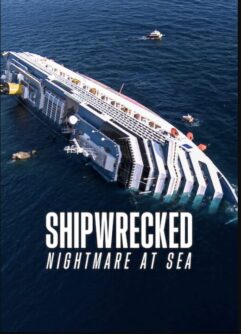
SHIPWRECKED: NIGHTMARE AT SEA
The Costa Concordia, told by the people who got off it.
Should You Watch It?
Here is the decision. This is a very good documentary about a real catastrophe, and its method is what makes it work. Interviews with passengers and crew are cut together with footage shot during the disaster itself, so you are not being told what happened — you are watching it alongside the people it happened to.
It is also a film with faith in it. Several interviewees describe helping strangers at their own cost: a couple loading lifeboats, crew members getting others out knowing it meant they would be left behind. One couple credits God's grace for their survival. Another passenger remembers praying with the people in his lifeboat.
The cost is fear, and a little language. Six obscenities including one "f" word, two OMG profanities, and long stretches of footage from inside a tilting ship that are frightening by design. Injuries are described — a broken leg, bleeding from a fall — though nothing is shown.
So: if you have teenagers, watch it with them. This is a conversation worth having. If you have young children, wait.
The Story
NO SPOILERS — WE KEEP THE SURPRISESIn 2012 the Costa Concordia set sail carrying more than 4,000 passengers. Everything went according to plan until the ship left its course — steered close to the shoreline of Giglio Island so that a crew member could give his family a sail-by salute, horn and all.
The rocks did the rest. What follows is told by the people who lived it: passengers and crew describing their navigation through a ship that was no longer level, their efforts to get others out, and the journeys they made to safety.
Is It Any Good?
Four stars, and the reason is construction. Documentaries about disasters usually explain; this one immerses. The interviews carry the emotional weight — chilling, firsthand, specific — and the footage captured during the sinking puts you inside the event rather than in a chair being briefed about it. The two are cut together so that the panic and desperation register as they were felt, not as they were later summarized.
It is also patient with the aftermath. Rather than settling for the easy story of one reckless captain, the film follows investigators into the less satisfying truth: a faulty emergency generator, a crucial breakdown in communication between the captain and the helmsman, and a crewman promoted before he was ready by a company struggling to keep pace with its own growth. That is harder to dramatize, and more honest.
The Worldview
This documentary carries a strong moral and Christian worldview, and unusually, it earns both words from the people on screen rather than from narration.
The moral part is the behavior it records. A couple stayed to help load lifeboats. Crew members guided passengers to safety even though it meant they were left behind. On a night that gave everyone permission to think only of themselves, some people did not — and the film gives them the time to say so.
The Christian part is explicit. One interviewed couple speak often about their faith, saying they were saved "by God's grace." Another passenger recalls praying with the people crowded into a lifeboat. The film does not editorialize about any of it. It simply lets belief stand as part of the record, which is more persuasive than argument would be.
It is honest about the other half, too. Passengers describe others pushing past them to reach the lifeboats first, thinking only of themselves. The captain lied about the severity of the accident and left the ship before all of his passengers and crew were off; he was sentenced to sixteen years for it. Both kinds of behavior were true on the same night, on the same decks, sometimes in the same corridor. That refusal to make people simpler than they are may be the most biblical thing about the film.
Scripture sets the two side by side without flinching, and names the higher one: "Greater love has no one than this, that someone lay down his life for his friends" (John 15:13).
The Content Guide
The specifics — spoilers included by nature — so you can judge for your own family.
Dominant Worldview and Other Worldview Content/Elements
A strong moral and Christian worldview. Many of the people interviewed helped others to safety, for example, a couple helped load lifeboats, crew members helped others to safety, even though it meant they were left behind. There are also strong Christian elements; a couple that was interviewed speak often about their faith, saying they were saved “by God’s grace,” and another passenger recalls praying with people in one of the lifeboats
Foul Language
Six obscenities, including one “f” word and two “s” words, and 2 OMG profanities
Violence
Several scary scenes of video footage from inside the boat as it sank, as well as people sharing stories of injuries, including a broken leg, bleeding from falling down, but nothing is shown
Sex
No sex
Nudity
No nudity
Alcohol Use
No alcohol
Smoking and/or Drug Use and Abuse
No smoking or drug abuse;
Miscellaneous Immorality
Passengers share stories of other passengers pushing others out of the way to get on lifeboats first, only thinking of themselves, the ship’s captain lied about the severity of the accident and evacuated the ship before all passengers and crew were off, but was punished for his actions with a 16 year prison sentence.
Talk About It
Questions for the couch, the commute, or the couple bingeing it together.
Some crew members guided passengers out knowing it meant they would be left behind. What makes a person choose that in the moment, and how would you want to be prepared for it?
John 15:13 · Philippians 2:3–4Other passengers pushed people out of the way to reach the lifeboats first. Both kinds of person were on the same ship. What does that tell us about human nature — and does it surprise Scripture? | Jeremiah 17:9 · Romans 3:23One couple credits God's grace for their survival, while 32 people did not come home. How do you hold gratitude for rescue and grief for loss at the same time? | Job 1:21 · Romans 12:15The captain lied about how bad it was, and the lie cost time nobody had. Where is the pressure in your own life to make a problem sound smaller than it is? | Proverbs 28:13 · Ephesians 4:25The Final Word
Eighty-seven minutes with people who survived something most of us cannot imagine, and who mostly want to talk about the ones who helped them. It is frightening, it is well made, and it leaves you thinking about what you would have done in that corridor. Watch it with your teenagers. Our answer stands: worth watching — teens and adults.