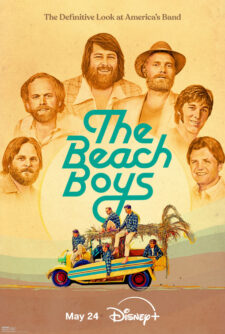
THE BEACH BOYS
Joyful vibrations, a few sour notes, and a lot of gorgeous harmony.
Should You Watch It?
Here's the decision. If you love the Beach Boys — and we do — you will love this documentary. It's a joyful, celebratory trip down memory lane, honoring the harmonies, the hits, and the American sound that Brian Wilson and his brothers, cousin, and friends built together.
It isn't all sunshine. The film touches Brian Wilson's mental struggles and drug use, which he admits "messed with his mind." It notes the abusive, jealous father who managed the boys, the band's brief dalliance with Eastern meditation, and Dennis Wilson's guilt over introducing Charles Manson to a friend. There's also some foul language along the way.
None of it lingers, but it's enough that this one is for older children and up, with a parent nearby. So: gather the family that's old enough, turn it up, and enjoy the ride.
The Story
NO SPOILERS — WE KEEP THE SURPRISESThree brothers from a musical California family — Brian, Dennis, and Carl Wilson — pull in their cousin Mike Love and two neighbors, Al Jardine and David Marks, and start singing tight harmonies over songs about surf, cars, and girls.
They rename themselves the Beach Boys, land a record deal, and become the top rock group in America by 1963. Then, one February night, four young men from Liverpool step onto The Ed Sullivan Show — and everything changes. What that rivalry sparks in Brian Wilson is the heart of the story.
Is It Any Good?
Four stars, and they're earned. This is a rich, affectionate overview of the band, its music, and its outsized influence on American pop. The archival material is a treasure — the shock on Brian Wilson's face when the Beatles hit America, his father snapping "I'm a genius too" during a recording session — and the film's central argument, that Brian was a true musical genius at harnessing his family's harmonies, lands beautifully.
It has limits worth naming. The movie doesn't dig deeply into Brian Wilson's mental illness, and it skips lightly over the band's music after 1967. This is a feel-good tribute, not an exposé, and it knows it. But as a celebration of songs like "God Only Knows" and "Good Vibrations," it's a delight from start to finish.
The Worldview
At heart, this is a warmly moral story: three brothers, a cousin, and two friends working hard to bring people joy through music. That's a good and God-honoring impulse — the sharing of a genuine gift. The film carries some patriotic warmth and a strong sense that enterprise and talent, well used, can bless a whole culture.
But the documentary swims in the currents of the 1960s, and viewers should know it. There's a strong Romantic streak in how it treats artistic genius, and it nods approvingly at the youth rebellion of the era. It references the Eastern meditation the Beatles and Beach Boys helped popularize, and the drug use that, by Brian Wilson's own admission, damaged his mind. Woven through it all is real human brokenness: a father consumed by jealousy of his own son, a son who never recovers from that father's betrayal and withdraws from the world, and the long shadow of the Manson murders touching one band member's conscience.
That last thread is the film's saddest note — the way a gift meant for joy gets tangled in guilt, envy, and loss. The music reaches for something transcendent; the lives behind it ache for peace they couldn't manufacture. Scripture names the only place that peace finally rests: "Come to me, all who labor and are heavy laden, and I will give you rest" (Matthew 11:28).
The Content Guide
The specifics — spoilers included by nature — so you can judge for your own family.
Dominant Worldview and Other Worldview Content/Elements
Light moral worldview with strong pro-capitalist elements about the gift of music and three brothers working together and with their cousin and two neighbors to bring joy to people through popular music, with some light patriotic images and content, but marred by some issues that include a strong Romantic attitude about artistic genius and the youth rebellion of the 1960s, the brothers’ father works hard to manage the band’s interests, but it’s said he’s sometimes mean and jealous, and references in one scene to the Eastern meditation that affected some young adults during the 1960s, led by the Beatles and the Beach Boys
Foul Language
One “f” word, one “s” word, one “d” word, five “h” words, one GD profanity, three light profanities
Violence
Light newsreel footage of violent protests in the 1960s and references to the Manson Family murders and rock drummer’s guilt about introducing Charlie Manson to the owner where some of the murders took place (the owner, a rock/folk producer, rejected Charlie Manson’s songs, and Manson later targeted the man’s former house even though he had stopped living there)
Sex
No sex scenes, but there are light references to rock stars attracting girls while on tour
Nudity
Upper male nudity in shots of people at the beach and in the crowds at rock music performances
Alcohol Use
No alcohol use
Smoking and/or Drug Use and Abuse
No tobacco smoking but references to rock stars taking LSD and stimulants during the 1960s and composer admits that the drugs messed up his mind;
Miscellaneous Immorality
Rock star admits he was jealous of the Beatles and their success, and rock star’s mother says her husband was jealous of their son’s songwriting and musical success, and the son never gets over his father selling his band’s published songs for a pittance and withdraws from the world.
Talk About It
Four questions for the couch, the commute, or the couple bingeing it together.
Murry Wilson worked hard for his sons but grew jealous of Brian's success — "I'm a genius too." Where does the line fall between healthy pride in someone we love and envy of them?
Proverbs 14:30 · Galatians 5:26Brian Wilson turned to drugs during immense pressure and admits they "messed with his mind." What healthier places can we run to when the weight feels crushing?
Psalm 62:5–8 · Philippians 4:6–7The film shows real gifts tangled up in envy, betrayal, and loss. How does the gospel speak to a talented life that still ends in withdrawal and pain?
Matthew 11:28–30"God Only Knows" is one of the most beautiful love songs ever written, born from a searching, hurting man. Why do you think longing so often produces beauty — and what is that longing ultimately for?
Ecclesiastes 3:11The Final Word
This one's a treat — a joyful, four-star tribute to a band that gave the world some of its sunniest, most gorgeous harmonies. A few mature references keep it from being for the littlest ones, but for a family with older kids who love the music, it's an easy yes: worth watching — older children and adults. Turn it up.