TRAINWRECK: POOP CRUISE
A gripping true disaster story buried under raunchy, self-absorbed excess.
Should You Watch It?
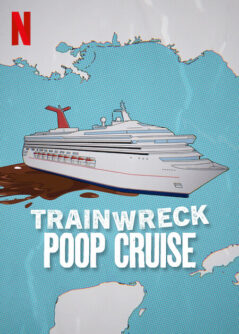
This documentary tells a genuinely gripping true story: a cruise ship stranded for five days without power, toilets, or working kitchens, told by the actual passengers who lived it. The footage is real, the editing is fluid, and the small cast of interviewees makes the ordeal feel personal rather than sprawling.
But the story the filmmakers chose to tell alongside the disaster is a problem. The dominant worldview here is materialistic and self-focused — people talking mainly about themselves, their comfort, their next drink, their next hookup. Drunkenness is treated as a fun escape rather than a loss of dignity, and the film leans hard into toilet humor, crude language, and sexual content, including an animated depiction of sex.
There are brief bright spots — a father's protective love for his daughter, a shipboard Bible study, a chorus of "Amazing Grace" — but they're outnumbered by everything else on this ship. Watch it at home if you're an adult curious about the true story, with your guard up. It's not for family movie night.
The Story
NO SPOILERS — WE KEEP THE SURPRISESIn February 2013, the cruise ship Carnival Triumph set sail from Texas with over four thousand passengers aboard. A fire breaks out in the engine room on the return trip from Mexico. It's put out quickly — but not before it knocks out the ship's power for good, leaving thousands of people stranded at sea with no toilets, no air conditioning, and no way to get home.
Is It Any Good?
Three stars means this is solid, well-crafted nonfiction filmmaking, even where its content falls short. The original footage from the actual event is organized fluidly, and the decision to interview a manageable handful of real passengers and crew — rather than dozens — gives the film a personal, followable through-line. The documentary succeeds at what it clearly set out to do: show just how dire conditions became for thousands of people with no basic amenities.
Where it falls short isn't craft but choice of focus. The filmmakers had access to a survival story with real tension and, apparently, real moments of faith and family loyalty — and chose to foreground partying, sex talk, and toilet humor instead. Good filmmaking in service of a shallow lens.
The Worldview
There are glimmers of something better here. A father speaks with real conviction about protecting his daughter. Passengers hold a Bible study in the middle of the crisis. Someone leads a chorus of "Amazing Grace." For a moment, the film touches what a disaster can reveal about the people who love each other and the God some of them still turn to.
But that's not the film's center of gravity. Its dominant worldview is materialistic and romanticist: people are shown caring mainly about what they can get and how they feel, and drunkenness — even the kind that leaves people "with no dignity" and "not remembering a thing" — is framed as a good time rather than a cautionary tale. Sex is discussed casually and depicted, including through animation, as just another feature of cruise life. The overall effect isn't a story about crisis revealing character; it's a story about self-indulgence continuing right through the crisis.
Scripture tells a very different story about people in trouble at sea: "Then they cried to the LORD in their trouble, and he delivered them from their distress" (Psalm 107:28). This documentary shows people singing that same hope in the middle of their storm — and then largely looks past it.
The Content Guide
The specifics — spoilers included by nature — so you can judge for your own family.
Dominant Worldview and Other Worldview Content/Elements
Light moral worldview of family. Dad expresses strong feelings about protecting his daughter. A bible study is held on the ship, and people sing Amazing Grace. However, a very strong materialistic and romanticist worldview is displayed throughout the movie. People only care about themselves, what they can get, and how they feel. They express getting drunk and having no dignity as a positive thing.
Foul Language
22 obscenities (7 “f” words plus one WTF is implied), 9 profanities (Multiple “OMG”, “WTH”, and the name of Christ is misused once) 3 uses of “piss”. Gosh, crap, and feces are used. There are many mentions of poop and urine throughout the movie, along with some toilet humor. A woman urinating is depicted.
Violence
One of the passengers describes violence on the ship, but none is shown.
Sex
Implied fornication. A woman describes being in another man’s bed when the ship alarm goes off, and we see a shot of her in his bed. A woman talks about the amount of sex on cruise ships. Two people are said to have had sex on the deck of the ship in open view, and an animation is used to depict it. A woman talks of not wanting to flash anyone when she sits down.
Nudity
Upper male nudity and women in bikinis. Women in crop tops are seen. An animation is used to show a man and woman without pants, peeing overboard. The man’s buttocks are seen. Upper and lower female nudity is shown while a woman is peeing in the shower. We see the side of her thigh, buttocks, and torso.
Alcohol Use
Drinking is encouraged throughout the movie, and people and bars are quite a common theme. A couple of the ladies talk about getting so drunk that they leave their dignity behind and don’t remember a thing. At one point, the bar is open for free beer, and people are shown drinking large amounts and getting drunk.
Smoking and/or Drug Use and Abuse
One of the women mentions she is taking Imodium. A man smokes a cigar.
Miscellaneous Immorality
People are shown hoarding food. A dad and a mom are divorced.
Talk About It
Four questions for the couch, the commute, or the couple bingeing it together.
In the middle of the crisis, some passengers held a Bible study and sang "Amazing Grace," while others focused on partying and self-preservation. What draws different people toward God versus toward themselves when life gets hard?
Psalm 107:28 · Philippians 2:3–4Several people describe getting drunk enough to "lose their dignity." How does Scripture describe the cost of that kind of escape, and what does real freedom look like instead?
Ephesians 5:18 · Galatians 5:13Food hoarding and self-focus emerged quickly once comfort disappeared. What does this documentary suggest about human nature under pressure, and what does the Bible say we're capable of, for better or worse, in a crisis?
James 1:2–4 · Romans 12:10The father in this story speaks strongly about protecting his daughter. What does godly protection and love within a family look like when things go wrong?
Ephesians 6:4 · 1 Corinthians 13:4–7The Final Word
There's a genuinely compelling survival story inside this documentary, and it's well told. But the filmmakers surrounded it with heavy language, casual and animated sex, nudity, and drunkenness treated as a good time — a lot to wade through for adults, and far too much for families. Our answer stands: wait for home — adults only. Looking for something the whole family can watch together instead? Start with our latest.