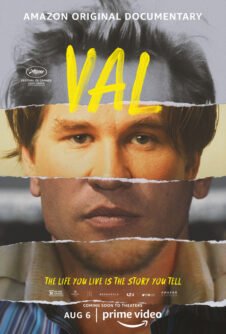
VAL
An intimate, melancholy portrait of a movie star's unraveling.
Should You Watch It?
VAL offers an unusually intimate look at longtime actor Val Kilmer. Hundreds of self-shot home movies, newly shot footage, and narration written by Kilmer and read by his son, Jack, create a personal record of early triumph, artistic ambition, family loss, illness, and a career that no longer looks as it once did.
The documentary is also overwhelmingly melancholy. Its portrait of an artist pursuing his vision is fascinating, but the story is marked by throat cancer, financial loss, and the consequences of Kilmer’s Christian Science beliefs. Strong language and those religious references push this into adult territory.
If you are an adult interested in showbiz stories and can handle the content, VAL is worth watching with discernment. It is not a family movie.
The Story
NO SPOILERS — WE KEEP THE SURPRISESVal Kilmer has filmed himself since childhood, beginning with a camera given to him by his father. Now a longtime actor facing throat cancer and severe damage to his voice, he looks back through years of personal footage.
The documentary follows his childhood, his love of acting, major roles, family relationships, artistic ideals, and present-day personal appearances. His son, Jack, reads narration written by Val.
Is It Any Good?
Three stars means VAL is an intriguing, affecting documentary that falls short of greatness. Its hundreds of personal clips provide a remarkably intimate look at Kilmer’s life, while footage from key acting roles and present-day appearances gives the story the feel of a showbiz insider account.
The documentary is strongest when it shows Kilmer’s early creative triumphs, his grief over his brother, and his passion for acting and Mark Twain. Its somber tone is consistent but heavy, and the portrait becomes increasingly sad as it considers illness, financial loss, and dreams that may no longer be possible. The result is touching and interesting, though difficult to enjoy in a conventional sense.
The Worldview
VAL presents a romantic worldview centered on an actor’s personal and career life. It includes moral elements, especially when Kilmer takes a moral stance and pursues what he sees as artistic truth. The film also presents his stubborn commitment to doing performances his way, even when that approach harms the entertainment value of his movies and makes him difficult to work with.
The documentary treats Christian Science as part of Kilmer’s beliefs. According to the source review, this false religious cult teaches that adherents are one with the Divine Mind and that sickness belongs to “mortal mind,” not Divine Mind. Kilmer’s refusal of regular doctors and modern medicine is presented as connected to the severe effects of his throat cancer.
The film’s longing for artistic truth and its portrait of suffering point toward questions VAL cannot answer for itself. Scripture says, “The truth will set you free” (John 8:32), but biblical truth is found in Christ, not in denying physical illness.
The Content Guide
The specifics — spoilers included by nature — so you can judge for your own family.
Dominant Worldview and Other Worldview Content/Elements
Romantic worldview about an actor’s personal and career life, with some moral elements where the actor takes a moral stance and is religious, but the actor also is a follower of the false religious cult of Christian Science where his throat cancer that’s ruined his career could have been cured much more thoroughly and easily if he had just allowed regular doctors and modern medicine to heal him rather than his false cult beliefs that illness is a delusion, plus actor stubbornly tried to insist on doing performances his way to pursue his ideas of artistic truth, and that was often to the detriment of his movies’ entertainment value and made him difficult to work with
Foul Language
10 obscenities (including five “f” words) and two GD profanities
Violence
Light violence includes a shootout from the movie HEAT and some quick fisticuffs from BATMAN FOREVER
Sex
No sex scenes or sexual immorality
Nudity
Two men jokingly bare their bottoms to a camera and later Val is seen naked from behind in a body of water, with his bottom showing, and he’s also seen lying naked on his side under the Statue of Liberty in a prank, though no public reaction is seen.
Alcohol Use
Man talks about playing famously debauched rock star Jim Morrison in “The Doors,” and it’s implied from footage that Morrison is drunk, high or both.
Smoking and/or Drug Use and Abuse
it’s implied from footage that character is drunk, high or both.
Miscellaneous Immorality
Val’s stubbornness on how to act makes him difficult to work with and also costs him his marriage.
Talk About It
Questions for the drive home, the dinner table, or the youth group.
The film portrays an artist who pursues his vision even when it costs him professionally. When should conviction guide us, and when should we listen to wise correction?
Proverbs 12:15 · Proverbs 15:22How should Christians respond when someone’s beliefs about sickness lead them away from medical help? What does Scripture teach about wisdom, counsel, and care for the body?
Proverbs 11:14 · 1 Corinthians 6:19–20Kilmer’s grief over his brother remains part of his life story. How can grief be carried honestly while still bringing sorrow to God?
Psalm 34:18 · 1 Thessalonians 4:13The documentary asks what remains when fame, health, and career success fade. Where should a person’s deepest identity and hope rest?
Matthew 6:19–21 · 2 Corinthians 4:16–18The Final Word
VAL is an intimate and affecting portrait of a gifted actor, but its sadness, strong language, and Christian Science references make it unsuitable for children and young teens. Adults interested in showbiz stories may find it worth the trip. For a family movie night, see our.