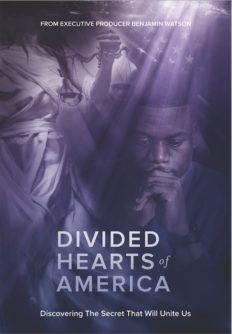
DIVIDED HEARTS OF AMERICA
A compassionate, powerful pro-life documentary for teens and adults.
Should You Watch It?
Yes—if you and your family are ready to engage one of America’s most painful moral conflicts. Former NFL player Benjamin Watson travels the country seeking truth about when life begins, whether the unborn are human, and how pro-life and pro-choice Americans might have meaningful conversations.
The documentary addresses abortion’s history, changing legislation, economic effects on impoverished communities, and the grief carried by mothers, fathers, and others. Its powerful interviews and personal testimonies are handled with tact, precision, empathy, compassion, and love. The film’s strong Christian, moral, pro-life conviction is clear, yet it encourages conversation and understanding.
The subject matter is difficult. Interviewees describe abortion in vivid, scientific detail, though the accompanying images are not graphic. Watch it with teenagers and adults who can process that material, and use parental discernment with younger viewers.
The Story
NO SPOILERS — WE KEEP THE SURPRISESFormer NFL player Benjamin Watson travels around America to examine what individuals and government believe about the sanctity of life. He interviews politicians, scientists, legislators, doctors, former abortionists, abortion survivors, social activists, and people deeply involved in both the pro-life and pro-choice movements.
The documentary traces the history and legislation surrounding abortion while listening to people who have lived through its consequences. Watson seeks truth beneath the arguments and asks whether meaningful conversation can help save future generations of children.
Is It Any Good?
Four stars means this is an exceptionally strong documentary. It is extremely well-made and expertly navigates the popular talking points of the abortion debate.
The film combines interviews and testimonials from legislators, doctors, former abortionists, abortion survivors, and social activists. Its most powerful moments come through personal testimonies, including accounts from people conceived in rape, an abortion survivor, and others affected directly by abortion.
The documentary handles its subject with tact, precision, and empathy. It is full of compassion and love while refusing to soften its moral position. Its goal is not merely to argue, but also to encourage conversation and understanding.
The Worldview
The documentary presents a very strong Christian, moral, pro-life worldview centered on the sanctity of life at conception. It emphasizes equality, empathy for the oppressed, personal responsibility, strong two-parent households, and responsibility in fatherhood and motherhood. Several interviewees point to God and prayer as reasons for their pro-life convictions, and one state senator calls for the revitalization of Christian faith and values in America.
The film also examines the abortion issue through legislation, economics, race, family, and personal testimony. It does include pro-choice perspectives, but the documentary presents them negatively. A Bible reading and several crucifixes appear as visible Christian elements.
At the heart of the documentary are two questions: When does life begin, and are the unborn human? Its answer is that unborn life has moral worth and deserves protection. That conviction aligns with Scripture’s care for life in the womb: “For you formed my inward parts; you knitted me together in my mother’s womb” (Psalm 139:13).
The Content Guide
The specifics — spoilers included by nature — so you can judge for your own family.
Dominant Worldview and Other Worldview Content/Elements
Very strong Christian, moral worldview that emphasizes the sanctity of life at conception, other moral worldview elements such as equality, empathy for the oppressed and taking personal responsibility, emphasizes strong two-parent households and responsibility in fatherhood and motherhood, other brief Christian worldview elements where several interviewees mention God and prayer as the reason they hold to pro-life perspective, one state senator says we need to revitalize the Christian faith and values in America, other pro-choice perspectives are shared but in a negative light, the reading of a Bible is shown as well as several crucifixes
Foul Language
One interviewee uses the term “rats a**”
Violence
The documentary follows abortion in America, as a result several interviewees describe, in vivid detail, how an abortion is carried out, although the descriptions are violent the pictures that accompany them are not graphic, and the language is scientific in nature, there are also references to the damage performing an abortion does on a women’s reproductive organs, there several mentions of rape as it relates to the abortion conversation, there are also brief clips of peaceful protesters, both pro-choice and pro-life, there are references to the holocaust and Nazi Germany in relation to the abortion issue, infanticide, genocide, and slavery are all mentioned, some pictures of slaves injuries Alcohol Use/Abuse: No alcohol
Nudity
No explicit nudity, but several pregnant bellies are seen
Sex
No sex, but there are many mentions of having children out of wedlock and unwanted pregnancies
Smoking and/or Drug Use and Abuse
No drugs, but it is mentioned that drug abuse is one of the side effects for women who get an abortion;
Miscellaneous Immorality
There is mention of racism, and how abortion, aside from being the murder of human beings, is also racist, because blacks and Hispanics are getting abortion at significantly higher rates than whites and Asians.
Talk About It
Questions for the drive home, the dinner table, or the youth group.
The documentary asks when life begins and whether the unborn are human. How should the Bible shape the way we answer those questions?
Psalm 139:13–16 · Luke 1:41–44The film emphasizes empathy for people affected by abortion. How can Christians speak truth about abortion while showing compassion to mothers, fathers, and children?
Ephesians 4:15 · Colossians 3:12Watson seeks meaningful conversation between opposing camps. What does listening well look like when an issue touches deep convictions?
James 1:19–20 · Proverbs 18:13The documentary highlights responsibility in fatherhood and motherhood. What responsibilities does Scripture give parents toward their children?
Ephesians 6:4 · Psalm 127:3–5The Final Word
This is a powerful, compassionate, exceptionally well-made documentary that treats the abortion debate as both a moral crisis and a human tragedy. Its vivid descriptions require discernment for younger viewers, but teenagers and adults can find here a serious invitation to truth, empathy, and conversation. WORTH THE TRIP — TEENS AND ADULTS.